Single Point Load Cells Explained: How They Work and Where They're Used
What a single point load cell is, how it handles off-centre loading, where it is used, and how to select and mount one in small platform and bench scales.
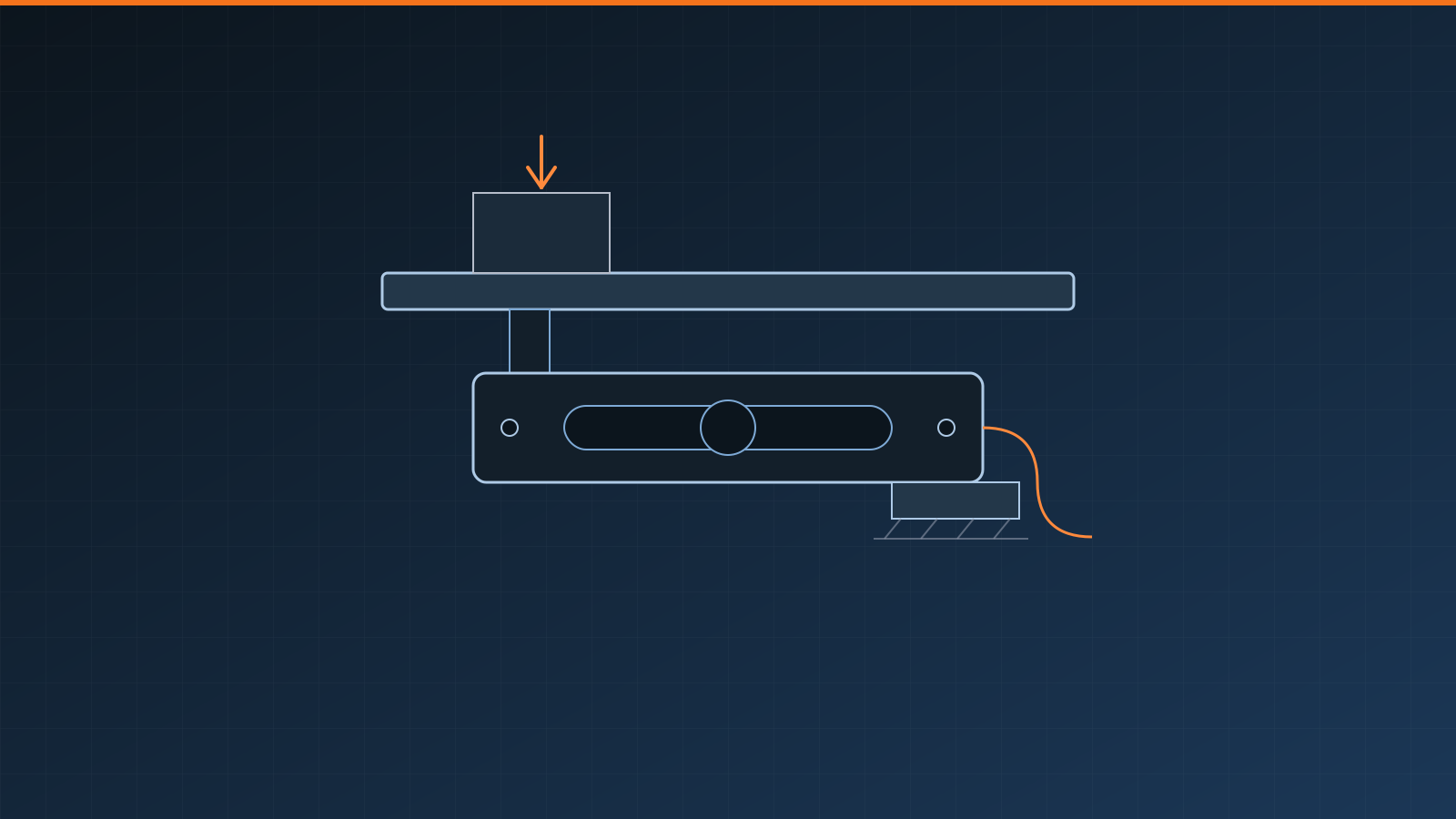
A single point load cell is a force sensor designed to carry an entire weighing platform on one cell while still reading accurately wherever the load sits on that platform. That off-centre tolerance is what makes it the standard choice for small and medium platform, bench and retail scales, where fitting a cell at each corner would be unnecessary.
This guide explains how single point load cells work, how they cope with off-centre loading, where they are used, and how to select and mount one. It builds on the fundamentals in our guide to how load cells work.
Key takeaways
- A single point load cell supports a whole platform on one sensor.
- It is engineered for off-centre (eccentric) load accuracy within a rated platform size.
- It suits small to medium platforms; larger platforms use multiple cells.
- Platform size, capacity and mounting are the critical selection and installation factors.
- Like any load cell, its accuracy depends on correct fitting and periodic calibration.
How a single point load cell works
Like other strain-gauge cells, a single point load cell has a machined metal spring element with strain gauges wired in a bridge. Applying load deflects the element by a tiny, repeatable amount, changing the bridge output in proportion to the force. The electronics turn that signal into a weight.
What sets the single point design apart is its parallelogram (bending-beam) structure. The element is shaped so that the output stays essentially the same regardless of where the load sits on the platform, not just when it is centred. During manufacture the cell is trimmed to minimise this “corner” error, so a weight placed near an edge reads the same as one placed in the middle — within the rated platform size.
Off-centre loading and why platform size matters
In real use, goods rarely land dead-centre on a scale. The single point cell’s compensation handles that, but only up to the platform dimensions the manufacturer rates. Exceed the rated platform size and the leverage of an edge load overwhelms the compensation, and corner accuracy falls off.
This is why datasheets pair a capacity with a maximum platform size. If your platform needs to be larger, the answer is usually multiple cells — typically shear beam cells at each corner — rather than one oversized single point cell. Multi-cell layouts also support vessels, where the mounting and pipework considerations differ; see the tank weighing system guide for that application.
Where single point load cells are used
- Retail and counter scales — compact platforms, frequent off-centre loads.
- Industrial bench scales — parts weighing, packing stations.
- Counting scales — where consistent accuracy across the pan matters.
- Packaging and filling — small platform weighing in process.
They are a natural fit anywhere a modest platform must read accurately without the cost and complexity of a multi-cell system.
Selecting a single point load cell
Focus on the parameters that determine fit and accuracy:
- Capacity — above your maximum load, with margin, but not so high that resolution suffers.
- Rated platform size — must cover your intended platform dimensions.
- Accuracy class — matched to the tolerance and any legal requirement.
- Material and protection — aluminium for lighter duty, stainless and higher IP ratings for washdown or harsh environments.
- Output and compatibility — matched to your indicator.
When replacing an existing sensor, match more than capacity alone. The load cell replacement guide covers dimensions, electrical compatibility, installation controls and post-installation verification.
Mounting basics
Correct installation is as important as the cell itself:
- Bolt the fixed end to a rigid base and the live end to the platform, in the orientation shown by the manufacturer.
- Apply the specified bolt torque and leave clearance so the cell can deflect freely — nothing should bridge or restrain the live end.
- Protect the cable and connections from damage and moisture.
- Calibrate the assembled scale after mounting, and periodically thereafter.
Poor mounting — a fouled live end, wrong torque, or a twisted cell — is a common cause of drift and non-repeatable readings.
Conclusion
The single point load cell earns its place by doing something deceptively hard: reading the same weight wherever the load lands on a small platform, from one sensor. Respect its rated platform size, mount it so it can flex freely, and keep the scale calibrated, and it delivers dependable accuracy for bench, retail and packaging weighing without the cost of a multi-cell build.
Frequently asked questions
What is a single point load cell used for?
It is used in small and medium platform and bench scales — retail, industrial bench, counting and packaging scales — where one load cell supports the whole platform. It suits platforms up to a size and capacity specified by the manufacturer.
How does a single point load cell handle off-centre loads?
It is designed and trimmed so the reading stays consistent wherever the load sits on the platform, within a rated platform size. This 'corner' or 'eccentric load' compensation is set during manufacture and checked during scale calibration, which is why platform size limits matter.
What platform size can a single point load cell support?
Each model specifies a maximum platform size for its capacity. Exceeding it degrades off-centre accuracy. Larger platforms generally need multiple load cells instead, typically shear beam cells at each corner.
How is a single point load cell mounted?
One end is bolted to a fixed base and the other to the platform, with the rated load applied through the platform. Correct orientation, torque and clearance so the cell can deflect freely are essential — follow the manufacturer's mounting instructions.
Related guides

Wireless Load Cells: Selection, Radio, Power, and Security
Understand wireless load cell architecture, radio reliability, battery planning, cybersecurity, calibration, and selection without relying on range claims.
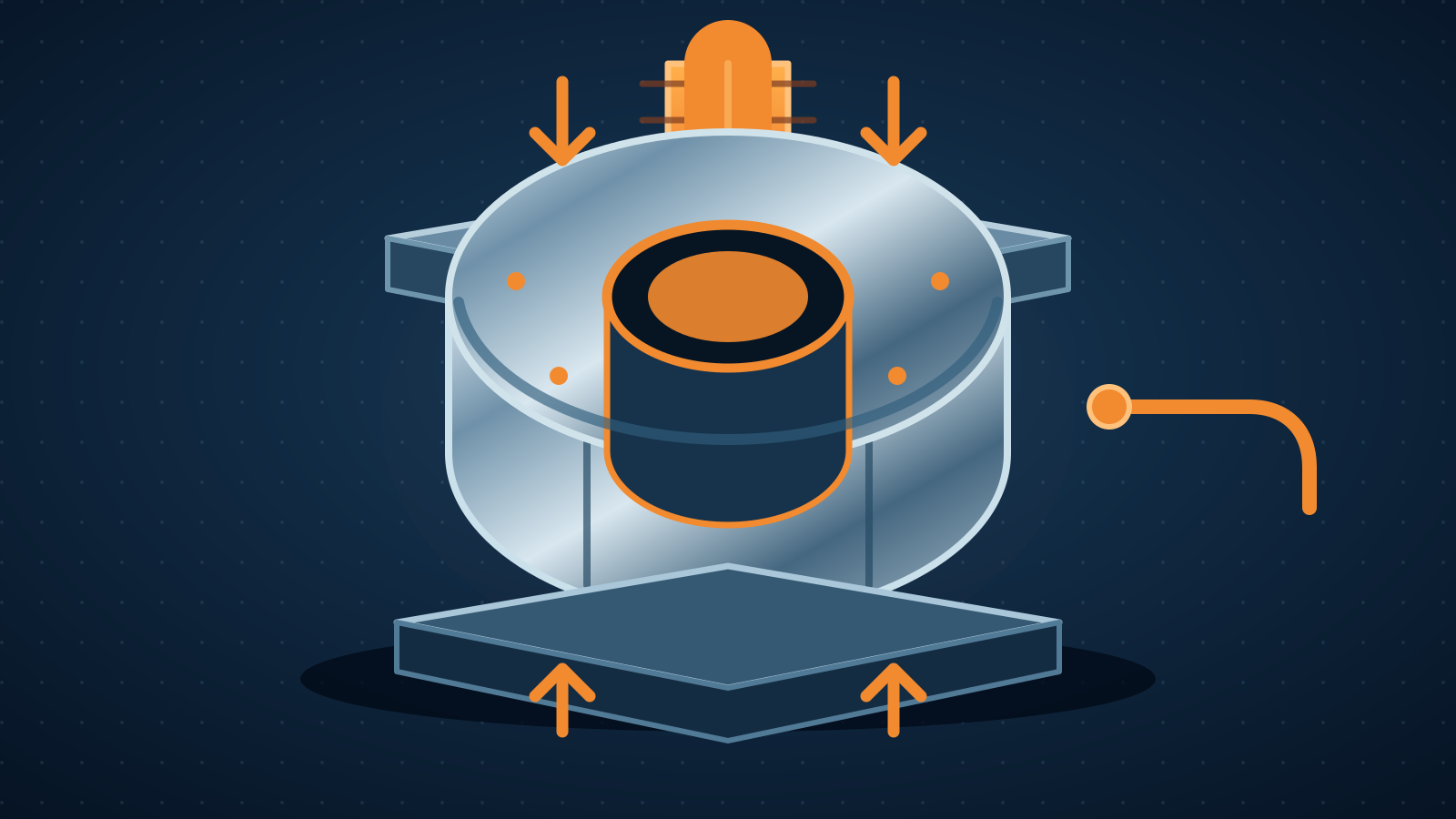
Donut Load Cells: Through-Hole Design and Installation
Learn how a donut load cell, also called a through-hole load cell, measures compression or tension and what reliable, qualified installation requires.
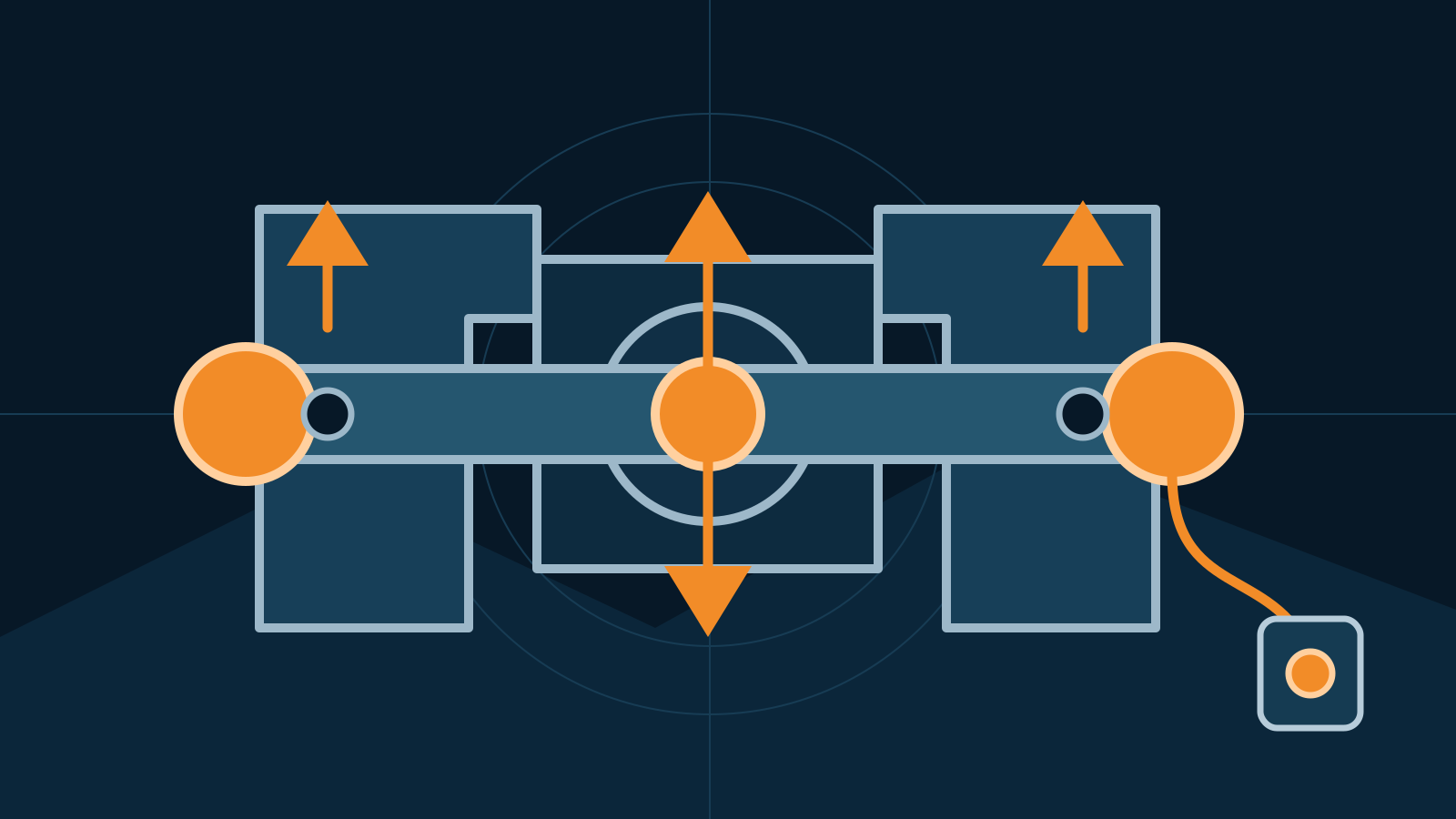
Load Pin: Operation, Selection, Installation, and Safety
Learn how a load pin measures force in clevis and pinned joints, what affects accuracy, and how to specify, install, calibrate, and inspect one safely.