How Load Cells Work in Crane Scales and Dynamometers
A clear guide to the load cell at the heart of crane scales and dynamometers: how strain-gauge sensing works, what affects accuracy, and common signal issues.
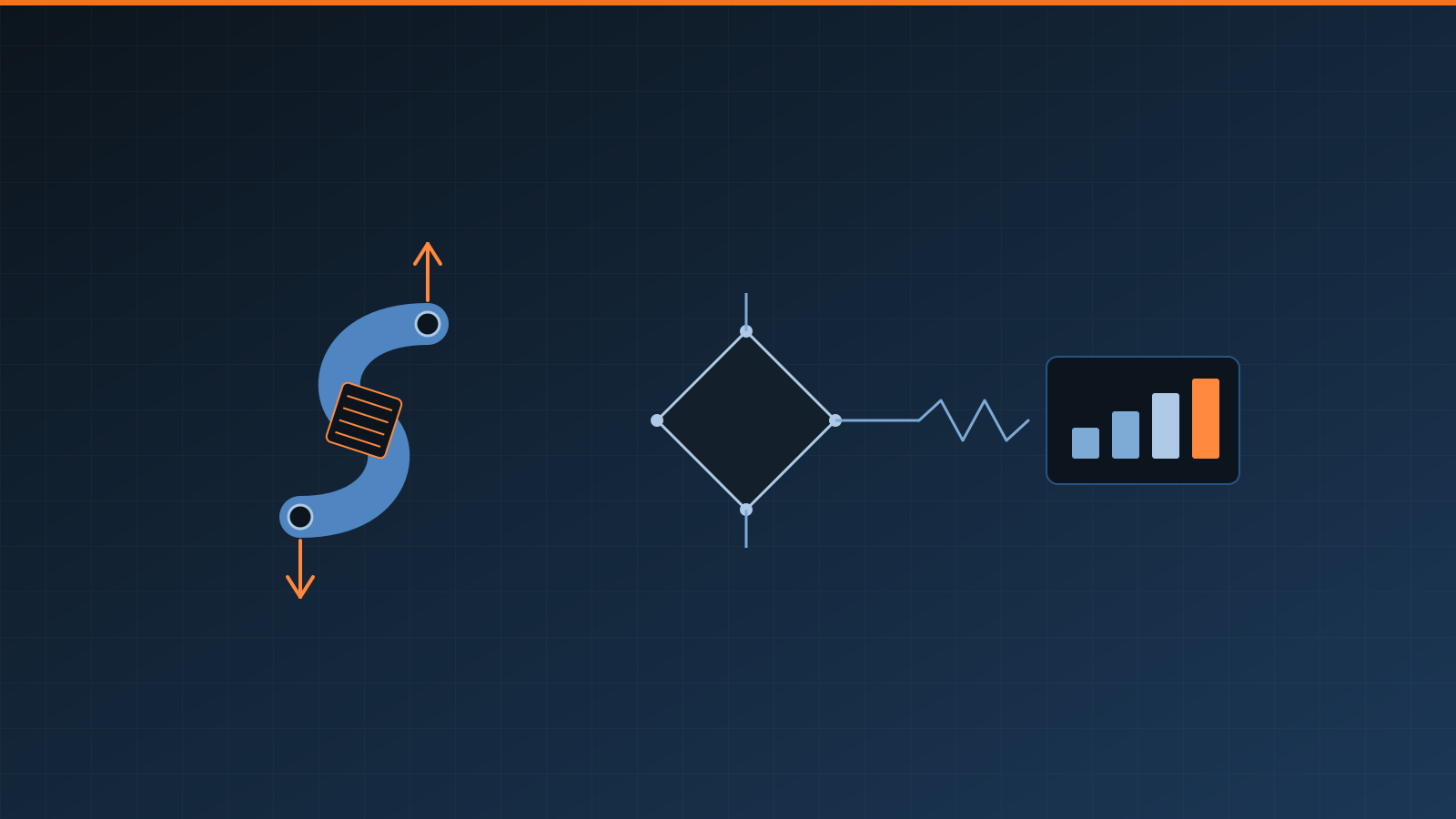
The load cell is the sensor at the heart of almost every modern crane scale and dynamometer. It is the component that turns the force of a suspended load into an electrical signal the instrument can read. Understanding how it works — and what affects it — explains why these instruments behave the way they do, why calibration matters, and how to interpret common faults.
This guide explains the load cell in a crane scale or dynamometer in plain terms: how it senses force, the types used for tension measurement, what limits accuracy, and the signal issues you are most likely to meet in the field.
Key takeaways
- A load cell converts applied force into a proportional electrical signal.
- Most use strain gauges arranged in a Wheatstone bridge for sensitivity and stability.
- In crane scales and dynamometers the cell works in tension along the load path.
- Accuracy is shaped by temperature, creep, hysteresis and off-axis (side) loading.
- Many “drift” or erratic-reading faults trace back to the cell, its cable or its connections.
What a load cell is
A load cell is a precision force transducer. Apply a force and it produces an electrical output that is proportional to that force. In a crane scale or crane dynamometer, the cell sits in the load path between the lifting point and the load, so the whole force passes through it and is measured.
How a strain-gauge load cell works
The most common industrial load cell uses strain gauges bonded to a precisely machined metal element (the “spring element”).
- Elastic deformation. Under load, the metal element deflects by a tiny, repeatable amount — well within its elastic limit, so it springs back when the load is removed.
- Strain gauges sense the strain. A strain gauge is a fine conductive grid whose electrical resistance changes slightly as it is stretched or compressed with the element.
- A Wheatstone bridge converts strain to voltage. Four gauges are wired in a bridge so that the small resistance changes produce a clean, amplifiable output and largely cancel out temperature effects.
- The signal is amplified and digitised. The bridge output is tiny (millivolts), so it is amplified, converted by an analogue-to-digital converter, and scaled into a force or weight value on the display.
Because the output is proportional to force, the same sensing principle serves both a weight-reading crane scale and a force-reading dynamometer — the difference is mostly in how the instrument scales and presents the result, as covered in crane scale vs dynamometer.
Load cell types used for suspended loads
Crane scales and dynamometers measure tension, so they use cells designed to be pulled rather than compressed:
- S-type (S-beam) load cells — named for their shape, widely used for tension in hanging applications.
- Tension/“dynamometer” link cells — load-bearing bodies with an eye or shackle at each end, built specifically to sit in a lifting line.
- Load pins and shackle cells — the sensing element is built into a pin or shackle, useful for measuring force directly at a connection point.
The choice affects capacity, how the cell is rigged, and how tolerant it is of misalignment.
From force to reading: where accuracy comes from
A load cell’s headline accuracy is only realised if several things are controlled:
- Calibration and scaling. The instrument must be calibrated so its digital reading matches known forces across the range. The reading is only as good as that calibration.
- Temperature. Temperature affects both zero and span. Bridge design and compensation reduce this, but extremes still matter.
- Creep. Under a sustained load the reading can drift slightly over time, then recover after unloading. Quality cells minimise creep.
- Hysteresis. The reading approaching a load from below can differ slightly from approaching it from above.
- Off-axis loading. Side loads, twisting and swinging apply force the cell was not meant to measure, degrading accuracy and, in extreme cases, damaging the cell.
Good rigging — letting the instrument hang freely and load squarely along its axis — removes a surprising amount of measurement error before it ever starts.
Common signal issues and what they suggest
When a crane scale or dynamometer misbehaves, the load cell and its wiring are prime suspects. Typical symptoms:
- Reads zero or full-scale and won’t move: possible open or shorted bridge, damaged cable, or failed amplifier input.
- Drifting reading under steady load: could be temperature change, moisture ingress in the cell or connector, or a failing cell — but confirm it is not genuine creep.
- Erratic or jumpy readings: often a loose connection, damaged cable, electrical noise, or water in a connector.
- Won’t return to zero after unloading: can indicate mechanical overload damage to the spring element, or significant hysteresis/creep — take the instrument out of service and investigate.
- Nonlinear or out-of-tolerance at calibration: may signal an overloaded or fatigued cell.
Many of these point to inspection of the cell, cable and connector before anything else. Where overload damage is suspected, stop using the device until it is checked — both accuracy and lifting safety are at stake.
Why this ties back to calibration
Because so much of a load cell’s real-world accuracy depends on calibration, temperature and loading conditions, periodic traceable calibration is what keeps the readings trustworthy. The as-found/as-left process and traceability principles apply to the load cell exactly as they do to the whole instrument — the same discipline that keeps a crane scale honest keeps a dynamometer honest too.
Frequently asked questions
Is a dynamometer just a load cell? A dynamometer contains a load cell, but it is more than the sensor: it adds the body, rigging interfaces, electronics, display and features such as peak hold. The load cell is the sensing core.
What is the difference between a load cell and a dynamometer? A load cell is the force sensor; a dynamometer is a complete instrument built around one to measure and display force in a load path.
Can a load cell be repaired? Minor issues like cabling or connectors can often be addressed, but a cell with overload or fatigue damage usually needs replacement and recalibration. Treat a suspected overloaded cell as out of service.
Why does my reading drift with temperature? Temperature changes affect the spring element and gauges. Compensation reduces this, but rapid or extreme temperature swings can still shift zero and span — allow the instrument to stabilise and keep it within its rated range.
Related guides
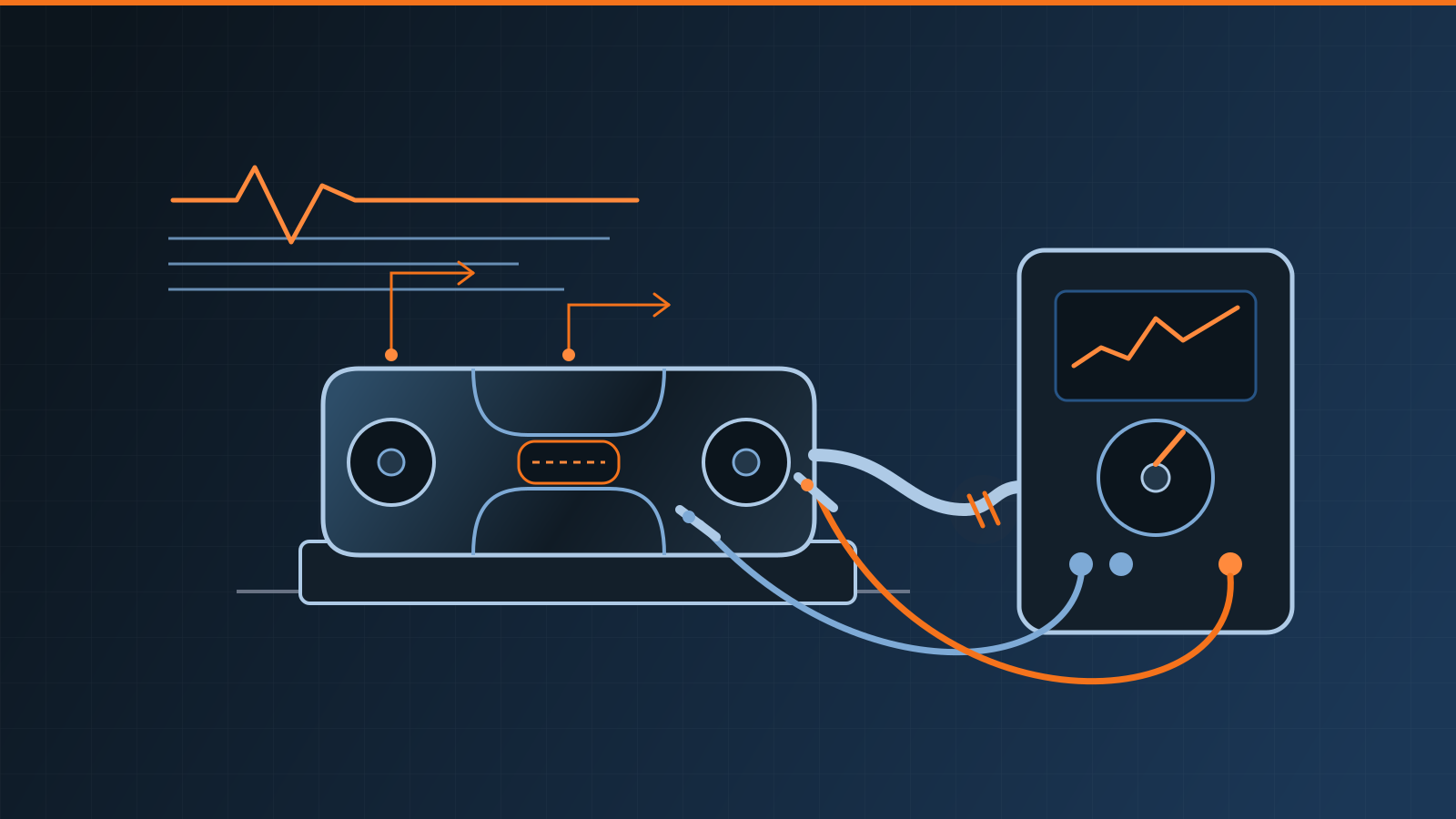
Load Cell Troubleshooting: A Structured Diagnostic Guide
Troubleshoot load cell faults in a safe sequence: document symptoms, inspect mechanics and wiring, then have a qualified technician test excitation and signal.
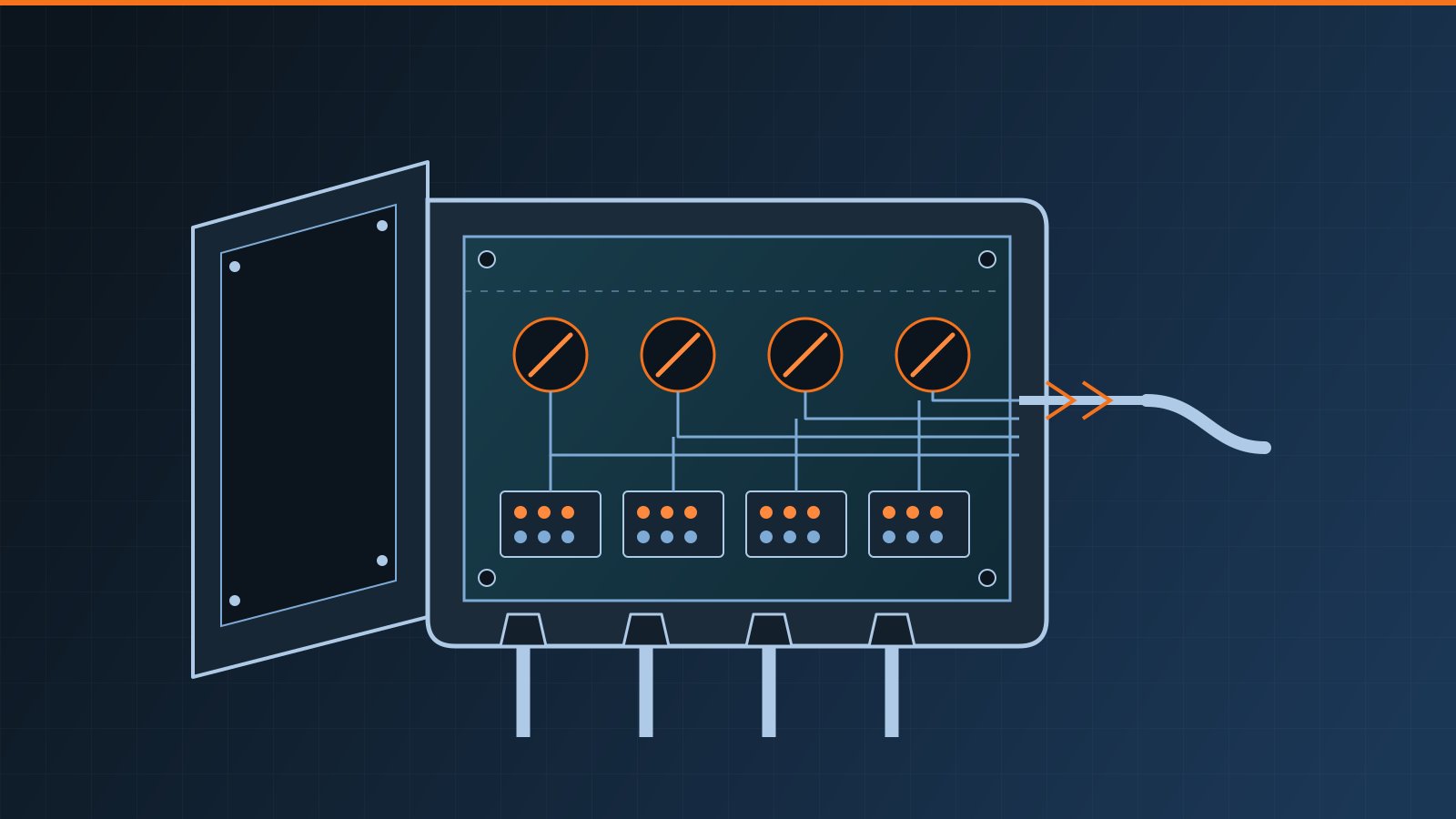
Load Cell Junction Boxes: Summing, Wiring and Corner Adjustment
Learn how a load cell junction box sums signals, supports corner adjustment, protects wiring, and what to check when selecting or troubleshooting one.
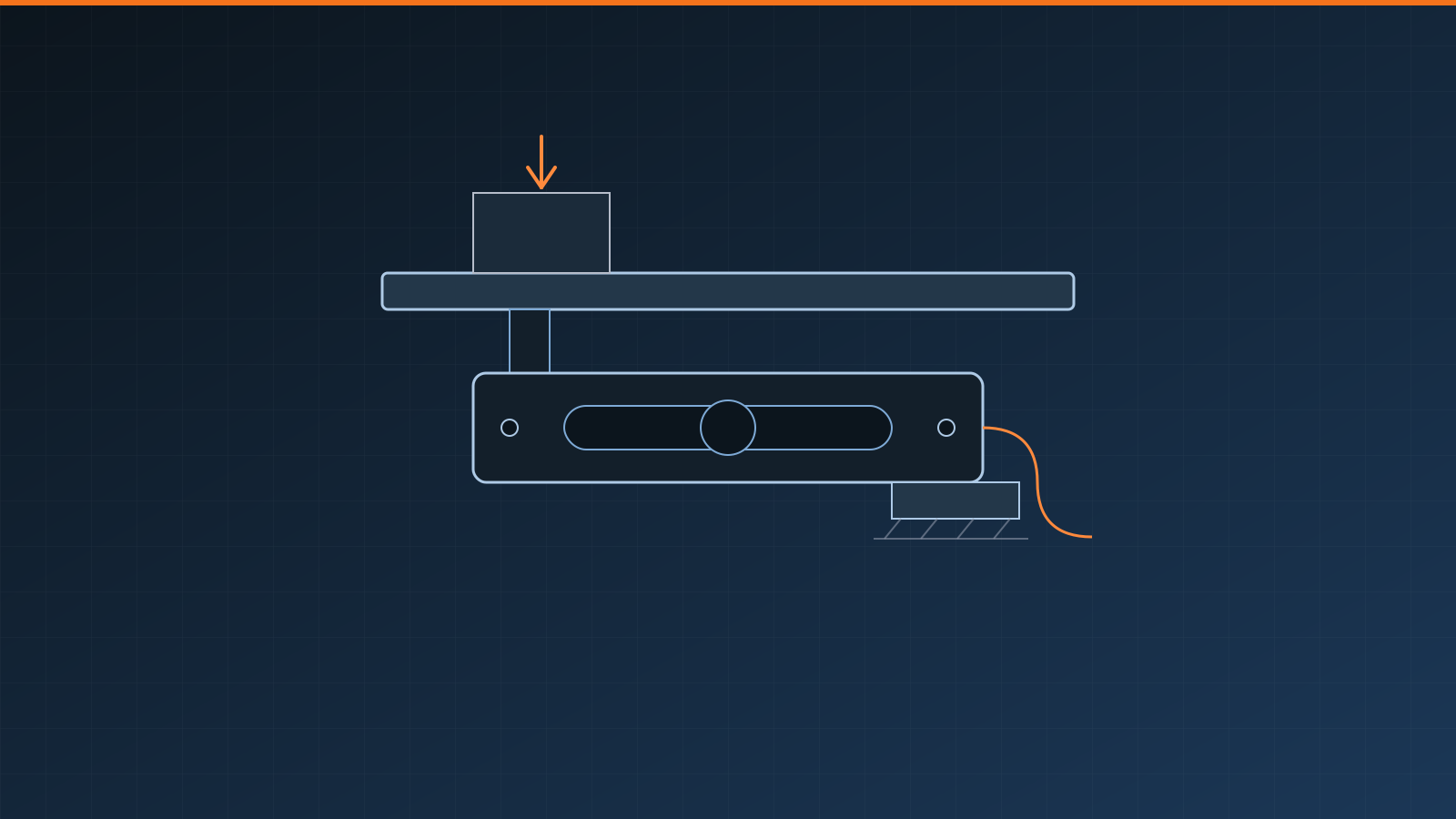
Single Point Load Cells Explained: How They Work and Where They're Used
What a single point load cell is, how it handles off-centre loading, where it is used, and how to select and mount one in small platform and bench scales.