Truck Scale Cost: What Drives the Total Project Budget
Understand truck scale cost drivers, from deck and foundation to software, calibration, installation, service, and total lifetime ownership.
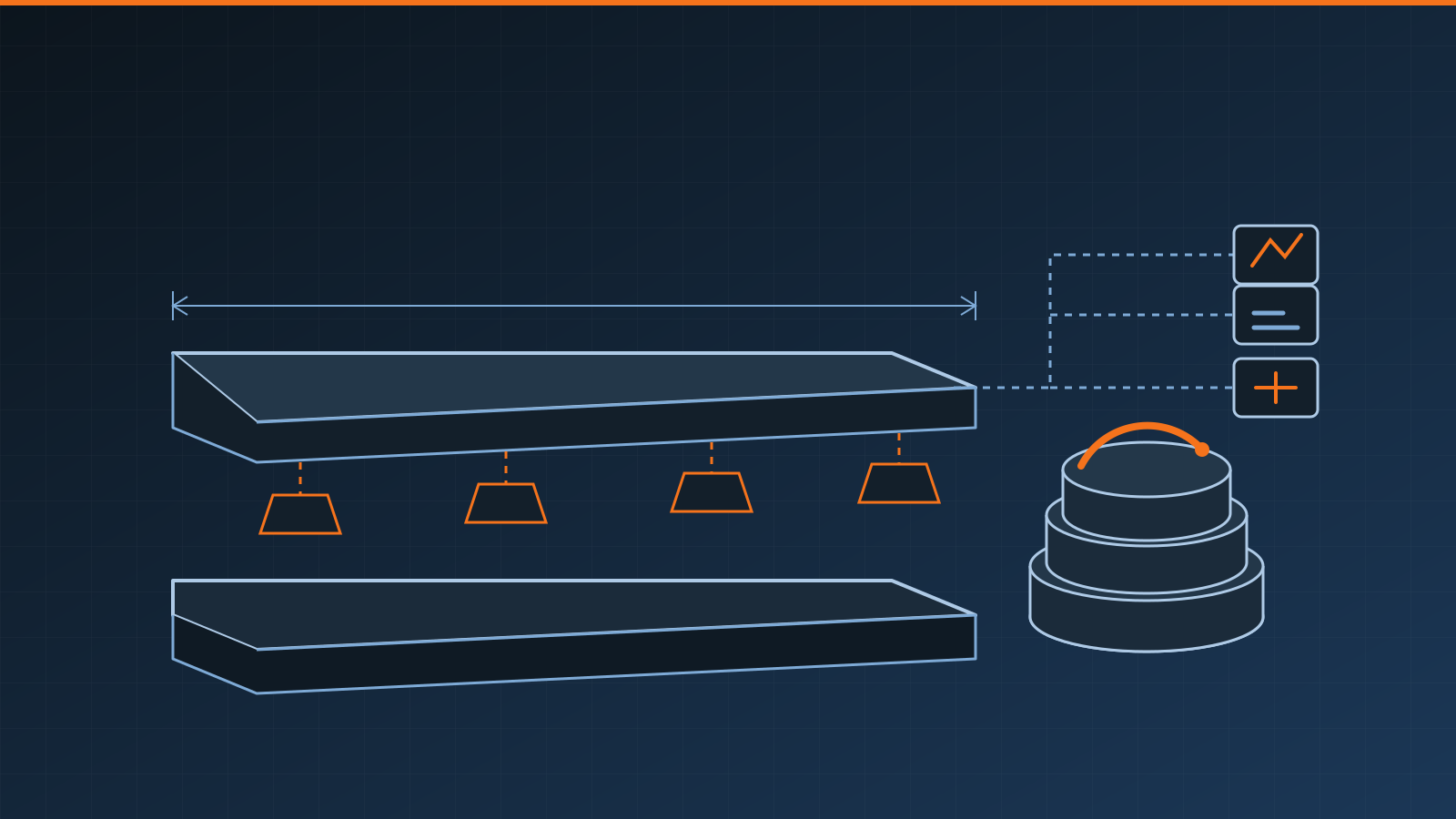
Truck scale cost is the total of equipment, freight, civil construction, installation, controls, software, commissioning, and ongoing ownership—not just the deck price. Because site conditions and operating requirements vary substantially, a universal price is usually misleading. Build a project-specific scope, obtain comparable quotes, and evaluate lifecycle risk before choosing the lowest initial bid.
Key takeaways
- Separate the equipment price from the installed and commissioned project cost.
- Civil work, ground conditions, drainage, utilities, and vehicle approaches can materially change the budget.
- Capacity, deck length, traffic volume, automation, and legal-for-trade requirements affect system scope.
- Compare supplier quotes with one inclusions-and-exclusions schedule.
- Budget for calibration, verification where applicable, maintenance, downtime, software, and eventual replacement.
What makes up the installed cost?
A truck scale, also called a weighbridge, is a system rather than a single product. The cost structure normally includes several work packages.
| Cost area | Typical scope questions |
|---|---|
| Scale equipment | Deck modules, load cells, junction equipment, indicator, cabling, and standard accessories |
| Site design | Survey, geotechnical review, traffic plan, foundation design, drainage, and permits |
| Civil work | Excavation, concrete, reinforcement, ramps or pit, approaches, guardrails, and restoration |
| Logistics | Freight, unloading, crane or rigging, storage, site access, and delivery scheduling |
| Electrical and data | Power, grounding, surge protection, conduit, networking, operator station, and lighting |
| Operations | Printer, shelter, intercom, barriers, traffic lights, identification, cameras, and signage |
| Software | Ticketing, user licenses, integrations, hosting, implementation, and support |
| Commissioning | Installation checks, configuration, testing, training, calibration, and verification if required |
A quote that covers only the scale package can look attractive while leaving the buyer responsible for major site and commissioning costs. Ask for separate subtotals and a clear responsibility matrix, including work performed by subcontractors.
The largest cost drivers
Size, capacity, and duty cycle
The scale must accommodate the vehicle combinations, gross loads, axle spacing, traffic rate, and future operations expected at the site. A longer or higher-capacity scale generally requires more structure and may change foundation and handling requirements. High traffic can justify heavier-duty components, redundancy, faster transaction controls, and stronger service coverage.
Avoid overspecifying from habit, but do not size only for today’s average truck. Provide suppliers with the longest vehicle, expected maximum gross load, daily transaction count, peak hourly traffic, axle patterns, and anticipated growth. The manufacturer or qualified engineer should confirm the applicable design.
Pit-mounted versus above-ground
An above-ground scale uses ramps and usually involves less excavation, while allowing easier access to many components. Its cost may rise when long approaches, retaining work, or a larger property footprint are needed.
A pit-mounted scale sits closer to road level and can suit restricted sites or traffic approaching from different directions. The tradeoff is greater excavation, engineered pit construction, drainage, confined access, and water or debris management. Local ground and water conditions often matter more than a simple rule about which type costs less.
Steel versus concrete deck
Steel decks can arrive substantially assembled and may shorten some site work. Concrete-deck systems may use precast elements or require a field pour and curing period, depending on design. Durability depends on engineering, fabrication, coating, concrete quality, drainage, traffic, environment, and maintenance—not deck material alone.
Compare expected service life, corrosion exposure, traction, inspection access, repair methods, installation schedule, and transport constraints. Do not choose solely on the initial deck line item.
Site and civil conditions
Unknown ground conditions create budget risk. Poor bearing capacity, unstable fill, frost exposure, groundwater, flooding, buried utilities, contaminated soil, and limited excavation access can all change the design. Level and durable approaches are also important to reliable weighing and vehicle positioning.
Early survey and geotechnical work may add preconstruction cost but reduce contingency and change orders. Drainage deserves explicit design, especially around pits and load-cell areas. Confirm who owns permits, utility locating, spoil disposal, environmental controls, and final paving.
Automation and integration
A staffed scale house may need an indicator, workstation, printer, and basic ticketing. An unattended lane can add kiosks, RFID or other identification, barriers, traffic signals, cameras, intercoms, remote assistance, and exception handling. Multi-site reporting and links to ERP, inventory, dispatch, or accounting systems add implementation and testing work.
The associated weighbridge software may be licensed once, subscribed to, or bundled with service. Compare implementation, interfaces, user or transaction limits, hosting, updates, remote support, data export, and offline operation—not merely the license label.
New, used, portable, or rental options
A new permanent system can provide a known specification, coordinated warranty, and design life appropriate to the application. A used scale can reduce equipment cost, but the buyer may incur disassembly, freight, inspection, refurbishment, missing-part replacement, controls upgrades, and foundation adaptation. Confirm component history and whether the complete configuration can be approved for its intended use.
Portable or relocatable scales can reduce permanent civil work for temporary projects, but they still need suitable bearing surfaces, approaches, power, traffic control, and calibration. Rental may shift capital spending and suit a defined project duration; review mobilization, minimum term, service responsibilities, damage provisions, and removal costs.
These alternatives are not direct substitutes in every application. Compare them against the same vehicle, accuracy, throughput, environment, legal, and duration requirements.
Costs after installation
Total cost of ownership should include planned and unplanned expenses:
- preventive inspection, cleaning, and maintenance;
- traceable calibration and legal verification where required;
- replacement of damaged load cells, cables, connectors, printers, or controls;
- pit pumping, drainage service, snow or debris management, and corrosion repair;
- software subscriptions, updates, backups, cybersecurity, and integration support;
- travel, callout, and after-hours labor;
- lost throughput during failures, testing, or repairs; and
- eventual modernization, relocation, or disposal.
Serviceability affects these costs. Review access to load cells and junction points, availability of parts, diagnostic capability, response coverage, and safe maintenance access. A lower-priced design that is difficult to inspect or repair may cost more over its operating life.
Calibration frequency and legal verification depend on the application, jurisdiction, manufacturer guidance, operating conditions, and performance history. Ask qualified providers and the relevant legal-metrology authority what applies; do not assume an interval or approval transfers from another site.
How to request comparable quotes
Give each bidder the same site information and request the same breakdown:
- Vehicle dimensions, maximum loads, axle configurations, and traffic volume
- Required deck length, capacity, graduation, and operating environment
- Site plan, survey information, utilities, drainage, and known ground conditions
- Mounting and deck preferences, or permission to propose alternatives
- Attended or unattended workflow and required peripherals
- Ticket, reporting, data-retention, and integration requirements
- Legal-for-trade or other applicable measurement requirements
- Freight, unloading, crane, civil, electrical, installation, and commissioning scope
- Calibration, verification, training, documentation, warranty, and service coverage
- Schedule, assumptions, exclusions, allowances, and change-order rates
Then normalize the proposals in a comparison sheet. Mark every item as included, excluded, allowance, buyer-supplied, or not applicable. Clarify taxes, payment milestones, warranty start date, acceptance criteria, and responsibility for failed tests.
Budget without relying on a generic price
A useful early budget can be built from supplier budget quotes plus local civil, electrical, freight, and professional-service estimates. Add contingency based on how much site investigation and design are complete. Keep assumptions visible and update the estimate as uncertainties close.
The defensible buying decision is not “Which truck scale has the lowest price?” It is “Which complete, compliant scope meets the site’s duty with manageable installation and lifecycle risk?” That comparison produces a budget the project team can use and a system operations can support.
Frequently asked questions
How much does a truck scale cost?
There is no reliable universal figure because the total depends on scale length and capacity, deck and mounting style, freight, civil work, drainage, electrical and data work, controls, software, commissioning, and local legal requirements. A site-specific quote with an explicit scope is more useful than an equipment-only price.
Is an above-ground truck scale cheaper than a pit-mounted scale?
An above-ground installation often needs less excavation and simpler drainage, but it requires ramps and more site length. A pit installation may fit a constrained traffic layout but generally involves more civil work and water-management planning. Ground conditions and site design can reverse assumptions, so compare engineered scopes.
What costs are commonly excluded from a truck scale quote?
Possible exclusions include permits, surveys, geotechnical work, excavation, concrete, drainage, crane or rigging, freight, electrical service, networking, traffic controls, software integration, testing, calibration, legal verification, training, and removal of an existing scale. Buyers should require a written inclusions-and-exclusions schedule.
Should I buy a new or used truck scale?
A used scale may reduce the equipment portion of the budget, but condition assessment, transport, disassembly, missing components, compatibility, foundation changes, corrosion repair, warranty limits, and approval for the intended legal use can outweigh the saving. Have qualified providers inspect the complete proposed system before deciding.
Related guides
Bagging Scale: Selection and Integration Guide
Learn how a bagging scale weighs and fills bags, how major system types differ, and what to specify for safe, reliable packaging-line integration needs.

Wireless Load Cells: Selection, Radio, Power, and Security
Understand wireless load cell architecture, radio reliability, battery planning, cybersecurity, calibration, and selection without relying on range claims.
Donut Load Cells: Through-Hole Design and Installation
Learn how a donut load cell, also called a through-hole load cell, measures compression or tension and what reliable, qualified installation requires.