Bagging Scale: Selection and Integration Guide
Learn how a bagging scale weighs and fills bags, how major system types differ, and what to specify for safe, reliable packaging-line integration needs.
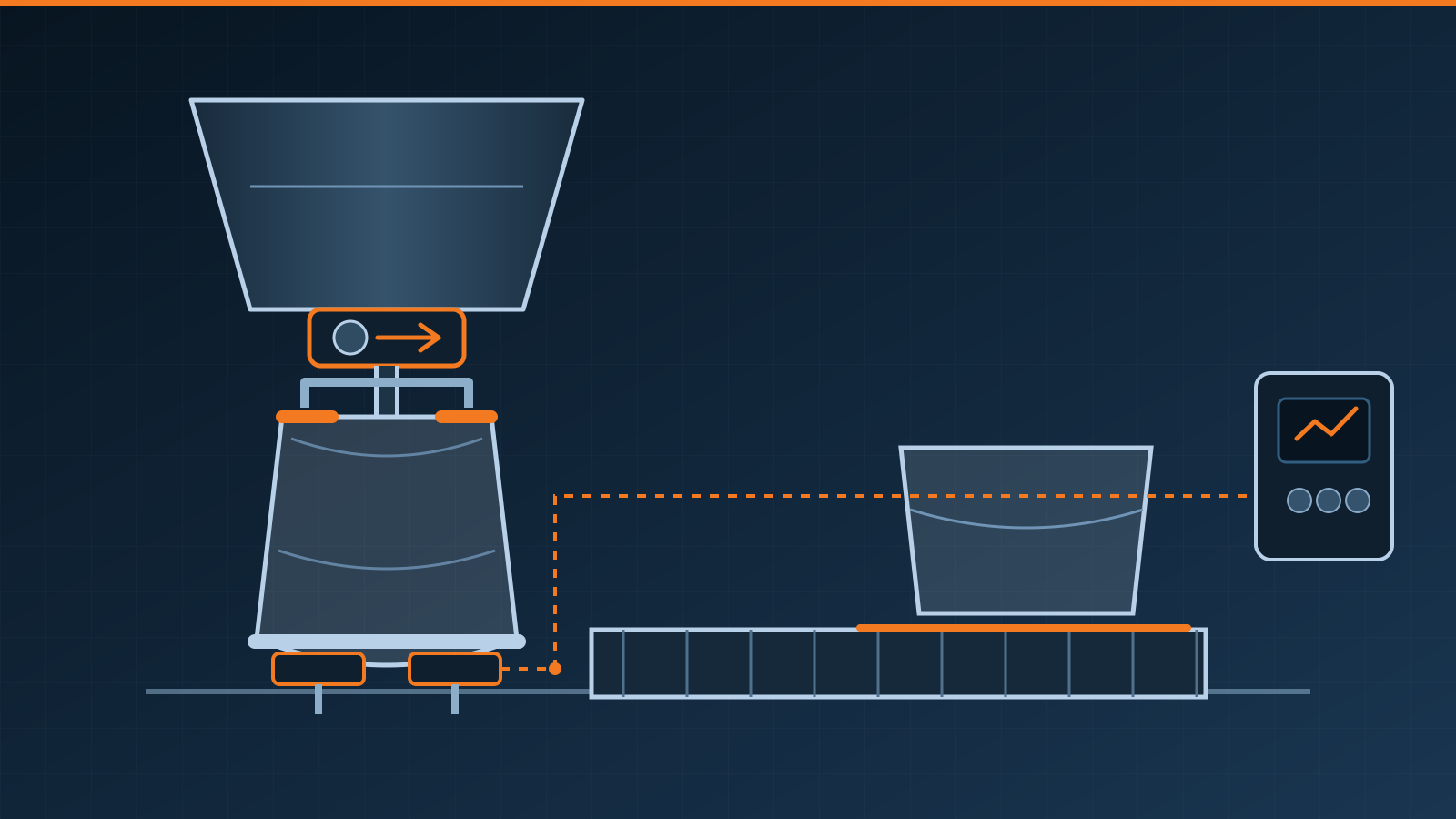
A bagging scale measures a target quantity of bulk product and controls its delivery into a bag. It is not simply a platform scale placed under a filling spout: a practical system combines product feeding, weighing, cutoff, bag handling, controls, dust management, and downstream interfaces. Selection should be based on the actual material, bag range, operating environment, acceptance test, and line arrangement rather than a universal speed or accuracy claim.
Key takeaways
- Gross-weigh systems weigh product in the bag; net-weigh systems weigh a batch before transferring it to the bag.
- Product flow behavior determines feeder, gate, cutoff, aeration, and contact-material choices.
- A bagging scale fills by weight, while a checkweigher verifies a finished pack and a conveyor transports it.
- Mechanical support, vibration, dust extraction, bag presentation, and closing equipment affect the complete line.
- Specify performance using representative products, bags, target weights, and a documented test method.
- Calibration, guarding, dust hazards, and legal-for-trade requirements need qualified, application-specific review.
How a bagging scale works
Bulk material first enters a supply hopper or surge bin that provides a reasonably consistent feed condition. A feeder or gate then moves material toward the weighing section. Load cells measure either a weigh hopper or the bag and its support assembly. The controller compares the measured value with the recipe target and commands the filling device to reduce or stop flow. The filled bag is released for settling, closing, labeling, and transport.
Many systems use a faster bulk-feed stage followed by a controlled final-feed stage. That general concept helps balance output and cutoff control, but the suitable hardware and settings depend on how the material starts, stops, compacts, and continues falling after the command. Fine powder, pellets, grain, flakes, and irregular aggregates do not behave alike. Material testing is more useful than assuming one feeder design will handle every product.
The weighing instrument also needs a clear signal. Flexible connections, dust sleeves, product buildup, air pressure, touching guards, and vibrating structures can create forces that do not represent product in the weighment. Integration must preserve a defined load path and allow inspection and cleaning.
Gross-weigh versus net-weigh bagging systems
| Arrangement | Weighed item | Practical strengths | Main integration questions |
|---|---|---|---|
| Gross weigh | Product is weighed directly in the supported bag | Simpler material path; useful where gentle handling or cleanout matters | Bag tare variation, clamp/support forces, bag presentation, and fill-spout contact |
| Net weigh | Product is weighed in a hopper, then discharged into the bag | Weighing can occur while the previous bag is being closed or conveyed | Headroom, transfer loss, hopper discharge, double-dumping prevention, and cleaning |
| Open-mouth | Premade bag is presented to a fill spout | Flexible for many dry products and bag materials | Operator or automatic placement, clamp compatibility, dust capture, and closing method |
| Valve bag | Product enters through a valve opening | Compact package and controlled filling connection for suitable products | Product aeration, valve dimensions, sealing, pressure, and dust containment |
A gross-weigh design includes the bag and its support in the live weighing assembly. The sequence must account for how the bag is clamped, supported, and released. Changes in empty-bag mass may matter to the process, particularly where the controller uses a stored tare rather than measuring each bag condition.
A net-weigh design portions material in a separate hopper. Its discharge must transfer the intended amount without retention or spill, and the receiving bag must be ready before release. A net weigher can decouple part of the weighing cycle from bag handling, but that advantage should be demonstrated for the actual layout. Neither architecture guarantees a particular throughput or accuracy.
Filling machine, checkweigher, and conveyor are different
A packaging line may contain all three functions, but each has a distinct purpose:
- Bagging scale or weight filler: meters product and stops filling at the intended target.
- Checkweigher: independently measures a closed or completed bag downstream and applies classification, alarm, or reject rules. Our checkweigher performance guide explains why dynamic verification needs its own test plan.
- Conveyor: moves and spaces bags between stations. It may include settling, flattening, turning, or accumulation sections, but movement alone does not verify net contents.
Keeping these boundaries clear improves troubleshooting. An overweight checkweigher result could originate in feeder cutoff, material in flight, an incorrect recipe, unstable bag transfer, or the checkweigher itself. Likewise, a conveyor tracking problem should not be hidden by changing scale calibration.
Product and feeder selection
Start with representative product data: bulk density range, particle size and shape, flowability, moisture, temperature, tendency to bridge or flood, dust generation, fragility, corrosiveness, and cleaning constraints. Include alternate suppliers and seasonal conditions when they change behavior.
Gravity gates can suit free-flowing products, while screws, belts, vibratory feeders, or other metering devices may better control difficult materials. The choice also affects degradation, segregation, retention, and sanitation. Supply-hopper geometry and level can change pressure at the feeder inlet, so test both normal and challenging inventory states.
For combustible dust, hazardous locations, food contact, or allergen changeovers, equipment selection requires specialist review. Dust collection must not pull unpredictably on the live weighing assembly or create unsafe material movement. Follow the site hazard assessment, manufacturer instructions, and applicable authority requirements.
Integration and commissioning checklist
- Document every product, target range, bag style, bag material, and closure method.
- Confirm floor loading, headroom, access, support stiffness, and vibration sources.
- Define the feeder, supply-hopper operating range, refill effects, and cleanout method.
- Separate live and dead structures; check flexible sleeves, extraction ducts, cables, and guards.
- Provide safe bag placement, clamping, inflation if used, release, and failed-bag recovery.
- Coordinate conveyor height, transfer, spacing, settling, closing, labeling, and checkweighing.
- Specify contact materials, ingress protection, washdown method, dust control, and hazardous-area needs.
- Define recipes, user access, data records, alarms, communications, and recovery after power loss.
- Agree on calibration and acceptance tests using representative material and production bags.
- Plan safe isolation, guarding, stored-energy control, inspection, and maintenance access.
During commissioning, first inspect the mechanical installation and verify that the weighing assembly moves as intended without binding. Check individual sensor response, wiring, instrument configuration, bag handling, and interlocks according to approved documentation. Calibration should use a suitable reference method and should be followed by material trials over relevant products and targets.
Test more than average fill weight. Retain individual results and review variation, underfills, overfills, spills, incomplete discharge, bag damage, false starts, and behavior after refill or interruption. Where downstream verification is required, challenge pack tracking and disposition as well as the displayed weight. Useful records include product lot, recipe, target, bag type, operating state, reference method, results, adjustments, and responsible personnel.
Specifying realistic performance
A purchase specification should state what will be tested, under which conditions, and how acceptance will be decided. Define the product and bag matrix, target ranges, supply conditions, allowable warm-up, test duration, data treatment, invalid-cycle handling, and responsibilities for upstream and downstream equipment. Avoid transferring results from a different material or package without evidence.
Displayed resolution is not proof of filling accuracy, and peak mechanical rate is not sustained production output. Bag supply, operator tasks, refill behavior, closing, conveyor accumulation, dust-control limits, cleaning, and planned checks all affect useful line output. Ask suppliers to identify assumptions and excluded conditions rather than requesting one unsupported number.
Routine verification should be risk-based and informed by process history. If results shift, inspect product condition, buildup, feeder wear, gates, air supply, bag support, vibration, flexible connections, configuration, and reference equipment before adjusting calibration. The broader principles in our scale verification guide can help structure documented checks.
This article provides general selection guidance, not a machine safety assessment, control specification, or legal-metrology procedure. Qualified equipment suppliers, controls professionals, safety specialists, and calibration providers should review the installed application. The right bagging scale is the one whose material handling, weighing, bag interfaces, and acceptance method work together under the plant’s real conditions.
Frequently asked questions
What is a bagging scale?
A bagging scale is a weighing and filling system that portions bulk material into bags. It typically includes a product feeder, weigh hopper or bag-support arrangement, load cells, controls, a bag clamp or spout, and interfaces to downstream closing and conveying equipment.
What is the difference between a bagging scale and a checkweigher?
A bagging scale controls how much product is delivered into a bag. A checkweigher independently weighs a completed package as it moves downstream and can classify or reject it. The two machines answer different process questions and should not be treated as substitutes.
How accurate is a bagging scale?
There is no universal accuracy value. Performance depends on product flow, target weight, feeder and cutoff behavior, bag support, vibration, dust, controls, installation, calibration, and the defined test method. Evaluate the complete system with representative product and bags.
Should a bagging scale be gross weigh or net weigh?
The choice depends on product behavior, bag format, required output, available headroom, cleaning needs, changeovers, and integration. Gross-weigh systems fill while the bag is on the scale; net-weigh systems weigh a batch in a hopper before discharging it into the bag.
Related guides
Livestock Scale Guide: Types, Handling and Selection
Learn how livestock scales work, compare platform, alley, crate and portable designs, and plan safer animal handling, installation, weighing and maintenance.
Checkweigher Accuracy: Testing and Performance Guide
Learn what checkweigher accuracy means, what affects results, and how to build a practical test plan with process-based acceptance criteria and reject checks.
Tank Weighing System: Components, Installation, and Selection
Learn how a tank weighing system works, which components it needs, how piping and agitation affect readings, and how to plan installation and calibration.