Batch Weighing System: Process, Design, and Selection
Learn how a batch weighing system works, compare gain- and loss-in-weight architectures, and plan safe, dependable material and controls integration needs.
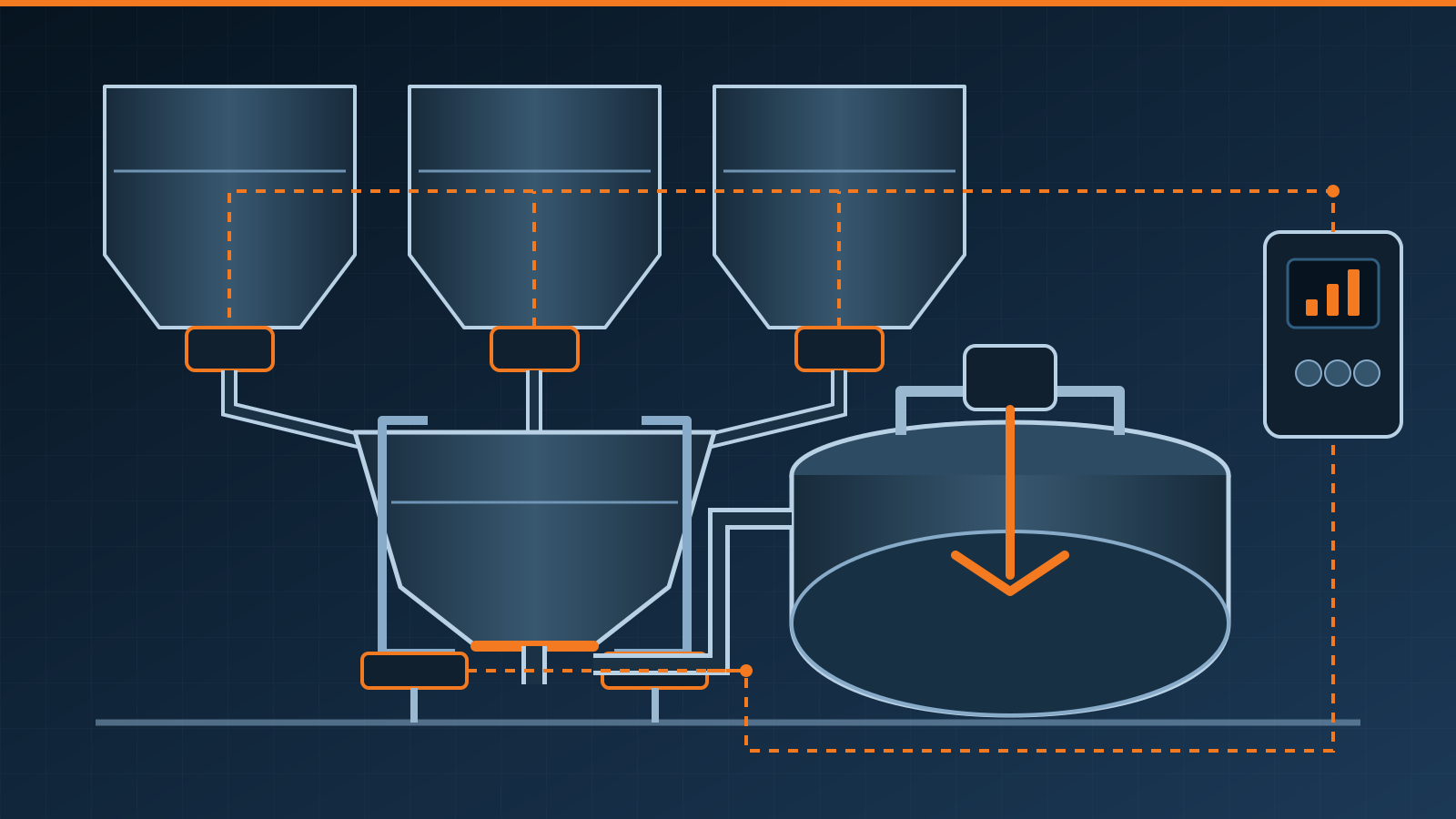
A batch weighing system measures predetermined quantities of ingredients before or during a production cycle. A complete system includes storage, feeders or valves, a batching scale, load cells and instrumentation, transfer equipment, controls, and batch records. Its design should begin with the recipe, material behavior, process hazards, and required traceability—not with a universal claim for speed or accuracy.
Key takeaways
- Gain-in-weight systems add material to a weighed hopper or vessel; loss-in-weight systems infer delivery from the decreasing weight of a supply vessel.
- Sequential and cumulative weighing use one receiver differently from dedicated or parallel weighing arrangements.
- A weigh hopper portions and transfers material; a weighed process tank may also mix, heat, react, or store it.
- Mechanical load paths, feeder behavior, refill effects, and product retention can dominate performance.
- Controls must be developed through a formal safety and process review, not copied from generic sequence examples.
- Commissioning should prove material accountability, interlocks, records, and recovery states as well as weight indication.
How batch weighing works
In a common gain-in-weight arrangement, a receiving hopper sits on load cells. One feeder starts, material enters the hopper, and the indicated weight rises toward the recipe quantity. The system stops or trims delivery based on the designed sequence. Additional ingredients may enter the same hopper, either measured from zero or accumulated on top of the previous ingredient. The completed batch is then transferred to a mixer, reactor, packaging line, or other process.
A loss-in-weight arrangement places the supply vessel and often its feeder on the weighing system. The delivered amount is calculated from the reduction in measured weight. This can reduce the need for a separate weigh hopper, but refill periods, flexible connections, downstream pressure, and changing material conditions require careful treatment.
The measurement itself does not ensure that the intended material reached the intended destination. A credible batch record may need to reconcile source selection, measured change, retained material, transfer confirmation, manual additions, rework, alarms, and operator interventions. The level of traceability should match quality, safety, and regulatory risk.
Common batching scale architectures
| Architecture | Measurement approach | Useful characteristics | Main design considerations |
|---|---|---|---|
| Sequential gain-in-weight | Ingredients enter one weighed hopper in sequence | Shared weighing vessel and compact arrangement | Error accumulation, cross-contamination, total capacity, and sequence duration |
| Cumulative gain-in-weight | Each ingredient target is added to the prior indicated total | Efficient use of one hopper | Correct target calculation, residual product, and ability to detect a wrong addition |
| Dedicated or parallel weighers | Separate ingredients or groups use their own scales | Simultaneous preparation and isolation of some materials | More equipment, transfer coordination, calibration, and structural support |
| Loss-in-weight | Delivery is inferred from decreasing source-vessel weight | Direct metering from a weighed source | Refill handling, supply-vessel connections, material head, and downstream interactions |
| Weigh-into-process vessel | Ingredients are added directly to a tank, mixer, or reactor on load cells | Fewer transfers and direct batch total | Agitation, piping forces, process loads, cleaning, and longer vessel occupancy |
Architecture selection is a process decision. A high-value micro-ingredient may need a smaller dedicated scale rather than sharing a large hopper intended for major ingredients. Materials that must remain segregated may require separate contact paths. A dusty powder, fragile inclusion, viscous liquid, and free-flowing pellet can demand different storage and delivery equipment even within one recipe.
Weigh hopper systems versus weighed tanks
A batch weigh hopper is generally an intermediate receiver. Its primary job is to collect a measured quantity and discharge it. Hopper slope, outlet geometry, venting, feeder interfaces, and surface condition influence whether the measured batch leaves completely and repeatably. A correct weight in the hopper does not prove complete transfer if material bridges or remains on internal surfaces.
A tank weighing system supports an entire process or storage vessel on load cells. The vessel may contain liquid, slurry, or blended product and may include an agitator, jacket, connected piping, and other permanent loads. Those attachments can introduce forces and dynamic effects that do not occur in the same way on a simple dry-material weigh hopper. Our tank weighing system guide covers these mechanical interactions in detail.
Some plants batch directly into a weighed tank. That combines batching and vessel weighing, but it does not erase the distinction: the design must account for both ingredient-delivery performance and the tank’s structural, piping, agitation, thermal, and process duties.
Material handling determines the result
Characterize each ingredient’s bulk density, flowability, particle size, moisture sensitivity, aeration, tendency to bridge or flood, cohesiveness, temperature, corrosiveness, and contamination constraints. Test realistic materials when published properties do not capture plant behavior.
Feeder or valve selection affects both control and product quality. Gravity gates, screws, belts, vibratory feeders, pumps, and control valves have different cutoff behavior, retention, leakage, and response to changing supply conditions. Material already moving after a stop command can contribute to overshoot. The solution may involve mechanical design, staged feed behavior, learned compensation, or process changes, but it must be proven for the defined operating envelope.
Connections to a weighed vessel require equal attention. Rigid pipes, flexible sleeves, dust extraction, hoses, cable trays, and touching guards can support or pull on the scale. Refill impact, air pressure, vibration, and nearby machinery may disturb readings. A stable foundation and intentional live-to-dead interfaces are fundamental.
Integration and controls without unsafe shortcuts
The batch controller may exchange recipe data, permissives, status, totals, and alarms with a PLC, manufacturing system, or supervisory platform. Define ownership of recipe versions, ingredient identity, target values, units, lot records, user permissions, and time synchronization. Protect configuration and retain auditable changes where the process requires them.
Control design must be application-specific. A generic article cannot safely prescribe valve states, start permissives, emergency behavior, or automatic restart. Those decisions depend on the machinery risk assessment, process hazard analysis, combustible-dust or hazardous-area classification, chemical compatibility, stored energy, safe state, and consequence of mixing incompatible materials. Safety functions should be designed and validated by qualified professionals using applicable requirements and manufacturer documentation.
Operational logic should still address foreseeable exceptions: unavailable ingredients, empty or overfilled vessels, unstable weight, sensor faults, interrupted transfer, communications loss, power recovery, manual additions, rejected batches, and maintenance mode. The response should prevent ambiguous batch status and require appropriate authorization before material movement resumes.
Selection and commissioning checklist
- Define recipes, ingredient ranges, batch sizes, sequence constraints, and allowed substitutions.
- Characterize every material and identify dust, chemical, hygiene, and cross-contact hazards.
- Choose gain-in-weight, loss-in-weight, dedicated, parallel, or weigh-into-vessel architecture.
- Calculate vessel dead load, material load, individual support reactions, and credible process loads.
- Select feeders, valves, vents, filters, and transfers for flow behavior and cleanout.
- Review foundations, supports, flexible connections, restraints, vibration, and environmental exposure.
- Define weight performance, material-accountability rules, and acceptance-test conditions.
- Specify recipe control, permissions, records, interfaces, alarms, and recovery requirements.
- Complete machinery and process safety reviews with qualified disciplines.
- Plan calibration access, reference equipment, inspection, spares, and maintenance isolation.
Commissioning should progress from mechanical and electrical inspection to instrument checks, dry functional tests where appropriate, calibration, representative material trials, and integrated batch challenges. Verify individual load-cell responses before relying on a summed indication. Confirm that tare, units, capacities, and data mapping match approved documentation.
Material trials should examine individual ingredient results, total batch, residual product, transfer completion, spills, incorrect-source prevention, refill behavior, and records. Include authorized recovery from realistic interruptions without creating uncontrolled material movement. The weighing terminal guide explains useful instrument and integration questions, while the exact control validation belongs to the project team.
Defining performance and ongoing verification
Specify accuracy and repeatability for named ingredients, target ranges, equipment states, environmental conditions, and a documented reference method. A large major-ingredient target and a small additive target may need different scales or acceptance criteria. Display resolution alone does not establish process accuracy, and a successful static calibration does not prove feeder cutoff or complete transfer.
Routine verification frequency should reflect process risk, usage, environment, performance history, manufacturer guidance, and regulatory or quality obligations. Trend zero, reference checks, ingredient deviations, alarms, and material reconciliation. If performance changes, investigate buildup, binding, feeder wear, leakage, product properties, flexible connections, vibration, wiring, and configuration before using calibration adjustment to conceal a mechanical or process cause.
This article is general guidance rather than a control narrative, safety specification, or calibration procedure. Engage qualified process, structural, electrical, controls, safety, and weighing professionals. A dependable batch weighing system is one whose material flow, load path, measurement, transfer, records, and safe operating states have been designed and tested as one process.
Frequently asked questions
What is a batch weighing system?
A batch weighing system measures defined quantities of one or more materials for a production batch. It combines storage and feeding equipment, a weighing vessel or feeder, load cells and instrumentation, material transfer, controls, and records appropriate to the process.
What is a batching scale?
A batching scale is the weighing equipment used to portion ingredients during batch production. The term may describe a gain-in-weight hopper, a loss-in-weight vessel or feeder, or another application-specific arrangement, so specifications should identify the actual architecture and process boundaries.
What is the difference between a batch weigh hopper and a tank weighing system?
A batch weigh hopper usually receives measured dry ingredients and discharges them to another process vessel. A tank weighing system weighs a supported tank and may measure liquid or mixed contents during storage or processing. Some systems batch directly into a weighed tank, but the mechanical and process duties still need to be defined separately.
How accurate is a batch weighing system?
No single accuracy figure applies to every system. Performance depends on material behavior, target quantity, feeder cutoff, vessel design, load paths, environment, sequencing, calibration, and the test method. Acceptance should be demonstrated with representative materials and operating states.
Related guides
Bagging Scale: Selection and Integration Guide
Learn how a bagging scale weighs and fills bags, how major system types differ, and what to specify for safe, reliable packaging-line integration needs.
Livestock Scale Guide: Types, Handling and Selection
Learn how livestock scales work, compare platform, alley, crate and portable designs, and plan safer animal handling, installation, weighing and maintenance.
Checkweigher Accuracy: Testing and Performance Guide
Learn what checkweigher accuracy means, what affects results, and how to build a practical test plan with process-based acceptance criteria and reject checks.