Axle Scales: Types, Uses and Buying Checklist
Learn how axle scales weigh vehicles, compare portable axle weighing pads with platforms, and choose a system for screening, compliance or operations.
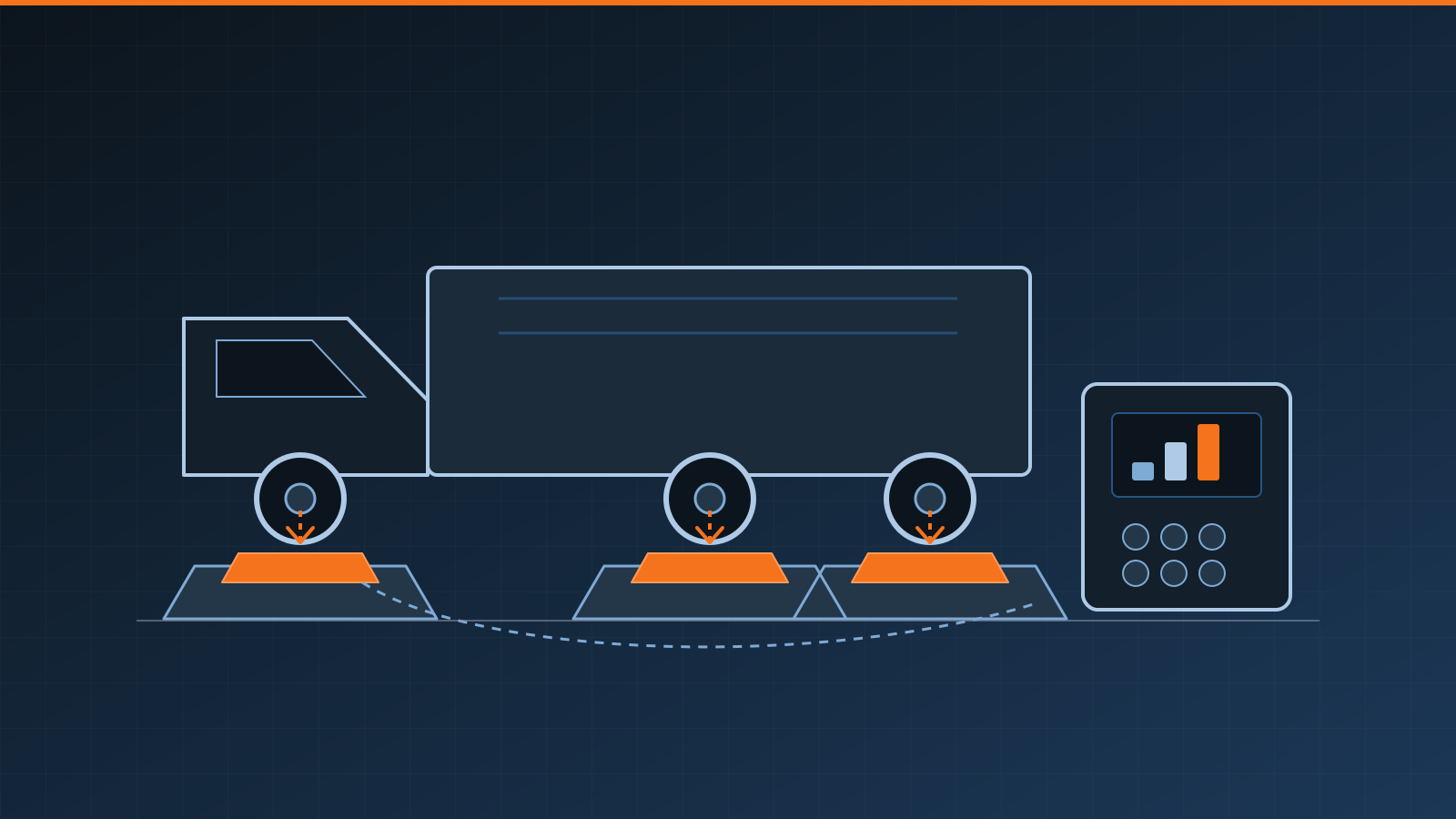
An axle scale measures the load carried by an individual vehicle axle or axle group. It helps fleets identify overloads, improve load distribution and screen vehicles before they reach a public road or receiving site. Portable axle scales use paired weighing pads, while installed systems use larger platforms or lane-integrated sensors. The right choice depends on whether you need occasional checks, repeatable site control, regulated compliance data or transaction weights.
Key takeaways
- Axle scales show how weight is distributed, not just how much the whole vehicle weighs.
- Portable axle weighing pads are flexible, but their results depend heavily on a firm, level setup.
- Static systems stop each axle on the scale; weigh-in-motion systems measure at a controlled crossing speed.
- Capacity must cover the heaviest expected axle load with operational margin, not only average loads.
- Sequential axle totals are not automatically equivalent to a simultaneous gross-weight measurement.
- Trade, enforcement and official compliance uses require confirmation from the authority having jurisdiction.
How an axle scale works
Most portable systems use two pads, one under the left wheel position and one under the right, connected to an indicator or wireless terminal. The system combines the wheel loads to report the axle load. The operator repeats the process for each axle or axle group. Software may record individual values, calculate side-to-side balance and sum axle readings into an estimated gross vehicle weight.
An installed axle platform applies the same principle in a fixed lane. Depending on its design, the vehicle either stops with an axle on the platform or crosses it slowly under a defined procedure. Dedicated weigh-in-motion systems collect dynamic measurements while the vehicle moves.
The process appears simple, but a truck’s suspension transfers forces among axles. A slope, a height difference between the scale and surrounding pavement, steering input or braking can change the measured load. Good results depend as much on the weighing site and procedure as on the sensors.
Main axle scale types
| Type | Best suited to | Main advantages | Main limitations |
|---|---|---|---|
| Portable axle weighing pads | Fleet spot checks, field work and changing locations | Easy to transport and deploy; measures wheel and axle balance | Setup-sensitive; requires level approaches and a consistent procedure |
| Portable platform or low-profile modules | Temporary lanes and recurring checks at multiple sites | Larger target area and more guided positioning | Heavier to move; may need ramps and more setup space |
| Fixed static axle platform | Frequent checks in a controlled lane | Repeatable alignment and faster routine operation | Civil work, drainage and a dedicated traffic lane may be needed |
| Dynamic axle scale | Higher-throughput screening | Vehicles do not stop at every axle | Speed, lane behavior and site design affect performance |
| Full-length vehicle scale | Simultaneous gross vehicle weighing | Captures the entire vehicle in one stable measurement | Higher site, foundation and installation requirements |
A full-length weighbridge answers a different primary question: total vehicle weight in one measurement. An axle scale is most useful when distribution, portability or screening speed matters. Some operations use both—axle equipment for loading decisions and a full platform for final gross weight.
Portable axle scales and weighing pads
A portable axle scale is attractive when vehicles must be checked at yards, jobsites, farms or temporary control points. Pads can be stored in a service vehicle and moved as operations change. They can also reveal left-to-right imbalance that a single total weight would hide.
Portability introduces setup responsibilities. Both pads should rest on a sound surface in the same plane. The other wheels need suitable support so the vehicle remains level while the measured axle sits on the pads. Purpose-made leveling mats, dummy pads or approach sections may be required by the manufacturer. Improvised boards, soft soil or visibly uneven pavement can compromise both measurement and safety.
Cable routing, wireless connectivity, battery condition and pad protection also matter. Place equipment so drivers can approach straight and personnel can remain clear of moving wheels.
Static versus weigh-in-motion operation
Static axle weighing
In static weighing, the driver stops with the axle centered on the active platform or pads. Static operation allows the reading to settle and is commonly used for loading checks and detailed axle records. Its disadvantages are lower throughput and the potential for braking or poor positioning to influence results.
A sound procedure specifies approach direction, axle position, brake use, transmission state, reading stability and whether a repeat pass is required. Follow the equipment manufacturer’s instructions rather than creating a generic procedure that may not suit the system.
Weigh-in-motion
A dynamic system records loads as axles cross the sensors. It can screen more vehicles and flag those needing further review. Results depend on controlled speed, straight tracking, smooth pavement and the system’s intended speed range. Acceleration, hard braking, lane changes and suspension movement can reduce consistency. Our in-motion weighing guide explains the sensors, lane controls and confirmation workflow in more detail.
For high-consequence decisions, define what happens after a screening result. A flagged vehicle may need reweighing under a more controlled or officially accepted method rather than immediate operational action based on one pass.
What affects axle weighing results
Several factors can create avoidable variation:
- Surface condition: settlement, soft ground or debris allows pads to tilt or move.
- Level differences: wheels at different heights change suspension loading.
- Approach geometry: bumps, slopes and tight turns introduce dynamic forces.
- Positioning: tires should be fully supported and centered as instructed.
- Vehicle movement: braking, acceleration and rocking affect load transfer.
- Tire and suspension condition: mechanical differences can alter distribution.
- Temperature and environment: equipment must suit the stated operating conditions.
- Calibration and damage: impact, overload, cable damage and drift can affect readings.
Routine visual checks and known-load or repeatability checks can reveal problems between formal service visits. Calibration frequency should reflect manufacturer recommendations, use, handling, operating conditions and any applicable regulatory requirements.
Choosing capacity and pad size
Start with the maximum possible axle and wheel loads, including unusual vehicles and poor load distribution. Do not size the system only from gross vehicle weight divided by the number of axles; loads are rarely shared evenly. Confirm the per-pad and per-axle limits, and understand whether stated capacity applies to each pad, a pair or the complete system.
Pad dimensions must accommodate the expected tire configurations. Dual tires, wide tires and off-road tread may require a larger active area. The ramps or leveling components must also support the same traffic safely.
Other selection criteria include:
- required wheel, axle and calculated gross displays;
- number of pads that can be read simultaneously;
- wired versus wireless communication;
- battery runtime and charging arrangements;
- environmental protection for outdoor or washdown work;
- data export, vehicle identification and ticketing;
- transport cases, pad handles and total carry weight;
- local calibration, repair and replacement-part support.
Axle scale buying checklist
Before requesting quotations, document the following:
- Vehicle classes, tire arrangements and maximum expected axle loads
- Static, dynamic or both operating modes
- Portable, temporary or permanently installed use
- Surface, drainage, lane width and available straight approach
- Screening, internal control, enforcement or commercial purpose
- Required axle, wheel, side-to-side and gross calculations
- Number of axles or pads to capture simultaneously
- Display, ticket, software and data-integration requirements
- Power, communications and environmental conditions
- Setup accessories, ramps and leveling mats included in the quote
- Operator training, calibration and local service plan
- Applicable approval, inspection and recordkeeping requirements
Ask suppliers to demonstrate the complete workflow with vehicles similar to yours. A pad specification alone does not show how long deployment takes, how drivers are guided or how records are reviewed.
Compliance and measurement caution
Axle scales support useful decisions, but the intended use controls the compliance burden. Internal load balancing and overload screening may permit a different system from one used to determine a sale, fee, enforcement outcome or certified shipping weight. A calculated gross weight from sequential axle readings should not be presented as equivalent to an approved whole-vehicle measurement unless the applicable authority and system documentation support that use.
If the measurement has legal or financial consequences, confirm device approval, installation, operating method, inspection and calibration requirements with the state or local weights-and-measures or transportation authority. Keep service records and understand the difference between adjustment, calibration and legal acceptance; our calibration certificate guide explains what a useful measurement record contains.
Selecting the right system
Choose portable axle weighing pads when mobility and axle distribution checks are the priority and your team can create a controlled, level setup. Choose a fixed platform when traffic is frequent enough to justify a dedicated lane and repeatable vehicle positioning. Consider a dynamic system when screening throughput matters, with a defined confirmation process for flagged vehicles.
The most reliable buying decision joins equipment and process: adequate capacity, tire-compatible dimensions, a suitable site, trained operators, documented checks and local service. That combination produces axle data the fleet can use without asking a portable system to perform a role it was not designed or approved to fill.
Frequently asked questions
What is an axle scale?
An axle scale measures the load carried by one axle or axle group at a time. Systems range from portable axle weighing pads used for spot checks to installed platforms used in a controlled vehicle lane.
Are portable axle scales accurate?
They can provide useful, repeatable results when the pads are correctly sized, placed on a firm level surface, used with suitable leveling equipment and operated according to the manufacturer’s procedure. Vehicle position, braking, suspension forces and uneven approaches can create significant errors.
Can axle weights be added to get gross vehicle weight?
A system may calculate gross weight by summing measured axle loads, but the quality of that total depends on the method, site and whether all axles are weighed simultaneously or sequentially. Do not assume a summed value is suitable for enforcement or trade without confirming the system’s approval and local rules.
What is the difference between static and weigh-in-motion axle scales?
With static weighing, the vehicle stops with the target axle positioned on the scale. A weigh-in-motion system measures axle loads while the vehicle crosses at a controlled speed. Each requires its own site design, operating procedure and performance expectations.
Related guides
Weighbridge Software: Features, Workflow, and Selection Guide
Learn what weighbridge software does, which features matter, how integrations work, and how to compare systems for secure, efficient truck-scale operations.
What Is a Weighbridge? Types, Uses and How They Work
A weighbridge weighs road vehicles and their loads. Learn how weighbridges work, the main types, key uses, and what affects accuracy and installation.
Bagging Scale: Selection and Integration Guide
Learn how a bagging scale weighs and fills bags, how major system types differ, and what to specify for safe, reliable packaging-line integration needs.