In-Motion Weighing: Systems, Accuracy, and Selection
Learn how in-motion weighing works, compare low- and high-speed WIM systems, understand accuracy factors, and select equipment for screening or enforcement.
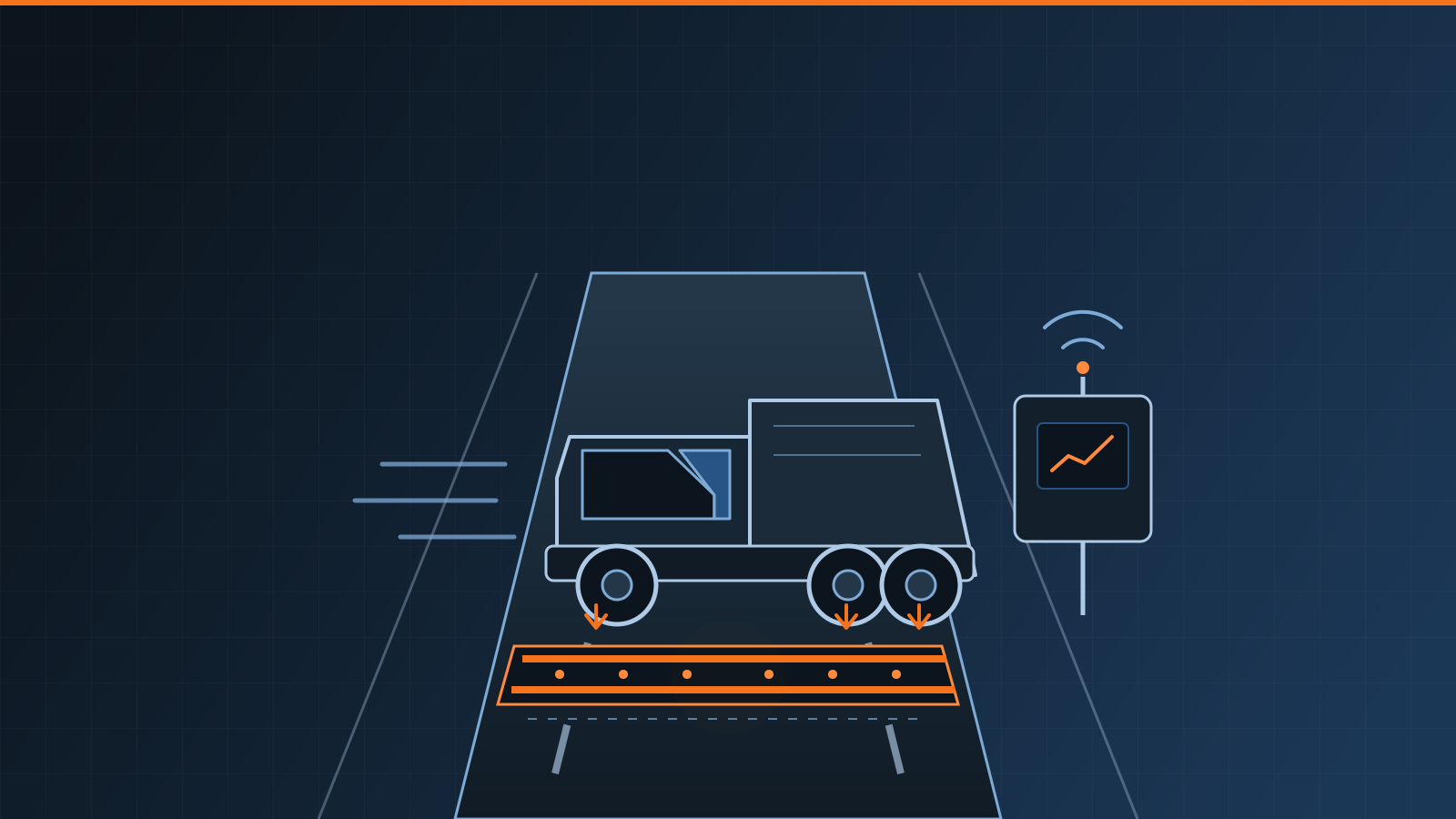
In-motion weighing measures vehicle axle loads and derives gross weight while the vehicle is moving across sensors. A weigh in motion system can reduce queues and screen large traffic volumes, but it does not automatically replace a static legal weighing instrument. The correct system depends on crossing speed, site geometry, required data, traffic flow, and whether results support internal operations, screening, or an enforcement action permitted by the local authority.
Key takeaways
- WIM combines roadway sensors, vehicle detection, processing, and data systems; it is more than a weighing sensor alone.
- Low-speed systems use a controlled lane and steady crawl, while high-speed systems collect data near normal road speed.
- Pavement profile, vehicle dynamics, speed, lane position, calibration, and maintenance all affect results.
- Screening identifies vehicles for review; direct enforcement requires jurisdiction-specific approval and procedures.
- There is no responsible universal accuracy claim or tolerance for every WIM technology and site.
- Selection should begin with the operational decision the measurement must support.
How a weigh in motion system works
As each axle crosses the measurement zone, one or more sensors respond to the force applied through the tires. Vehicle detectors establish presence and sequence, while speed or axle-spacing measurements help the processor associate sensor signals with the correct vehicle. Algorithms convert the dynamic signals into wheel or axle-load estimates and calculate values such as gross vehicle weight, axle-group weight, axle spacing, speed, and vehicle class.
The final record may also include a timestamp, lane, vehicle image, license plate, carrier identifier, or exception flag. A screening installation can send an overweight candidate to a staffed inspection area. An industrial site might use the same general method to monitor incoming material, control loading, or identify unusual axle distribution without stopping every truck.
Dynamic tire force is not identical to a stable static load. Suspension movement, pavement irregularities, acceleration, and braking can change the instantaneous force seen by the sensor. A WIM system therefore estimates weight from a controlled measurement process rather than simply capturing a stationary reading faster.
Low-speed versus high-speed WIM
| System type | Typical operation | Strengths | Main considerations |
|---|---|---|---|
| Low-speed WIM | Vehicle crosses a dedicated lane at a slow, steady speed | Controlled traffic path; useful for gates, facilities, and inspection lanes | Requires driver compliance, suitable approaches, traffic controls, and enough lane space |
| High-speed WIM | Vehicle crosses at or near normal roadway speed | Screens high traffic volumes with minimal disruption | More sensitive to road profile, speed variation, lane changes, vehicle dynamics, and sensor installation |
| Multi-lane high-speed WIM | Sensors and detection cover several live lanes | Network monitoring and broad traffic coverage | More complex vehicle tracking, lane closures, communications, maintenance access, and data validation |
Low-speed does not mean one fixed speed for every product. Each system has an intended operating range and crossing procedure. Drivers may need signals, barriers, lane guides, or instructions to maintain straight tracking without abrupt braking.
High-speed WIM can collect valuable data without diverting all traffic, but roadway quality becomes part of the measuring system. The design must account for the pavement before and after the sensors, not only the sensor trench or mounting frame.
This differs from portable or static axle-scale methods, which may stop a vehicle or weigh one axle at a time. WIM is selected primarily for flow and screening; axle pads are often selected for portability and controlled checks. Neither method should be assumed to provide the same legal status as a full static measurement.
Core WIM system components
A complete specification may include:
- Weight sensors: installed in, on, or beside the traffic surface depending on the technology and required outputs.
- Vehicle and axle detection: devices that identify arrival, direction, axle sequence, lane, and separation between vehicles.
- Speed and classification inputs: measurements used to determine speed, axle spacing, vehicle length, or class.
- Processor and indicator: signal conditioning, weight calculation, diagnostics, local display, and configuration controls.
- Identification equipment: cameras, plate recognition, RFID, or account credentials where records must be matched to a vehicle.
- Traffic controls: signs, signals, barriers, lane guidance, or diversion controls for low-speed and screening operations.
- Software and communications: record storage, alarms, reports, integrations, health monitoring, and secure remote support.
- Civil and electrical infrastructure: pavement, foundations, drainage, conduit, grounding, surge protection, network, and power.
Ask who is responsible for each interface. A sensor supplier, civil contractor, traffic-control integrator, software provider, and enforcement agency may all have different acceptance obligations.
What affects WIM accuracy and repeatability
Accuracy should be discussed for a defined technology, vehicle population, speed range, site, environment, and evaluation procedure. Important factors include:
- Road profile and structural condition: dips, joints, rutting, settlement, and flexible pavement excite vehicle suspension before measurement.
- Approach length and alignment: turns, grades, lane merges, and limited straight run-in can create unstable loading.
- Vehicle behavior: acceleration, braking, steering corrections, speed variation, and straddling sensors affect signals.
- Vehicle characteristics: suspension type and condition, tire configuration, axle spacing, load distribution, and liquid movement influence dynamic forces.
- Sensor installation: alignment, support, bonding, temperature behavior, drainage, cable protection, and workmanship affect performance.
- Calibration and validation: reference vehicles, load range, vehicle mix, repeat passes, seasonal conditions, and data review determine whether the setup remains representative.
- Maintenance: pavement damage, loose components, moisture, debris, failed detectors, and electrical faults can degrade data before a total failure is obvious.
A procurement claim should identify how performance will be tested and accepted. Request expected results under the proposed operating conditions, excluded vehicle or maneuver types, minimum valid-data rate, and the process for handling questionable records. Do not compare percentages from different test methods as if they were interchangeable.
Screening versus enforcement
Screening WIM flags vehicles that may be overweight or otherwise unusual. A conservative threshold can account for measurement uncertainty, and the flagged vehicle is directed to a separate confirmed weighing process. Screening can increase inspection efficiency because personnel focus on higher-risk traffic rather than stopping every vehicle.
Direct enforcement WIM uses the dynamic result as part of an enforcement action. Whether this is allowed depends on the jurisdiction and may require an approved device type, certified installation, controlled operating envelope, official verification, sealed settings, audit records, ongoing testing, and defined evidence procedures. Requirements are not transferable from one state, province, or country to another.
A system marketed as “enforcement capable” is not automatically lawful at a particular site. Confirm intended use with the transportation and legal-metrology authorities before design, then include their acceptance criteria in the contract. If approval is absent or uncertain, define WIM as screening and document the confirmation method.
WIM system selection checklist
- Define the decision: internal control, data collection, preselection, screening, or direct enforcement
- Document vehicle classes, axle patterns, expected loads, lane count, and traffic volume
- Select low-speed or high-speed operation and state the valid speed range
- Survey pavement profile, structure, drainage, utilities, approaches, grades, and lane behavior
- Specify required axle, group, gross-weight, speed, class, image, and identification data
- Define performance, valid-record, availability, and acceptance-test methods
- Confirm jurisdictional approval, certification, verification, and record requirements
- Plan traffic diversion, personnel safety, lane closures, and maintenance access
- Define software interfaces, cybersecurity, retention, audit trail, and outage behavior
- Include calibration, validation, training, spare parts, diagnostics, and service response
Use representative vehicles during site acceptance and compare WIM records with the designated reference method. Repeat testing across relevant lanes, speeds, load ranges, and positions. Operational acceptance should also prove that alarms, images, diversions, reports, and failed-sensor states work as designed.
Choosing a defensible WIM solution
A strong WIM project aligns sensor technology, roadway design, vehicle behavior, software, and the legal purpose of the measurement. Begin with the required operational outcome, have qualified providers assess the site, and make acceptance criteria explicit before construction. Continue with scheduled inspection and evidence-based validation after commissioning.
For high-consequence or regulated use, this article is general guidance rather than an approval or calibration procedure. Follow manufacturer requirements and consult qualified weighing providers, roadway specialists, and the relevant authorities. The best system is not the one with the broadest headline claim; it is the one that produces documented, usable results in the site’s real operating envelope.
Frequently asked questions
What is in-motion weighing?
In-motion weighing measures vehicle axle loads and estimates gross vehicle weight while the vehicle crosses sensors without stopping for a conventional static weighing cycle. The system combines weight sensors with vehicle detection, speed measurement, data processing, and often identification or imaging devices.
How accurate is a weigh-in-motion system?
There is no universal accuracy figure. Performance depends on sensor technology, installation, pavement and approach quality, vehicle speed and behavior, suspension dynamics, calibration, maintenance, environment, and the applicable evaluation method. Suppliers should state performance for the proposed site and use case.
Can WIM results be used for enforcement?
That depends on the jurisdiction, the approved system configuration, certification or type-approval status, installation, operating conditions, and required procedures. Many WIM systems are used only to screen vehicles for a separate confirmed weighing, while some jurisdictions permit approved direct-enforcement applications.
What is the difference between low-speed and high-speed WIM?
Low-speed WIM measures vehicles in a controlled lane at a slow, steady crossing speed. High-speed WIM measures vehicles traveling at or near normal roadway speed. High-speed operation supports greater throughput but is more exposed to dynamic vehicle and pavement effects.
Related guides
Bagging Scale: Selection and Integration Guide
Learn how a bagging scale weighs and fills bags, how major system types differ, and what to specify for safe, reliable packaging-line integration needs.
Livestock Scale Guide: Types, Handling and Selection
Learn how livestock scales work, compare platform, alley, crate and portable designs, and plan safer animal handling, installation, weighing and maintenance.
Checkweigher Accuracy: Testing and Performance Guide
Learn what checkweigher accuracy means, what affects results, and how to build a practical test plan with process-based acceptance criteria and reject checks.