Wireless Dynamometers: Use Cases, Benefits and Limitations
What a wireless dynamometer is, how the wireless link works, where it helps, and the practical benefits and limitations to weigh before choosing one.
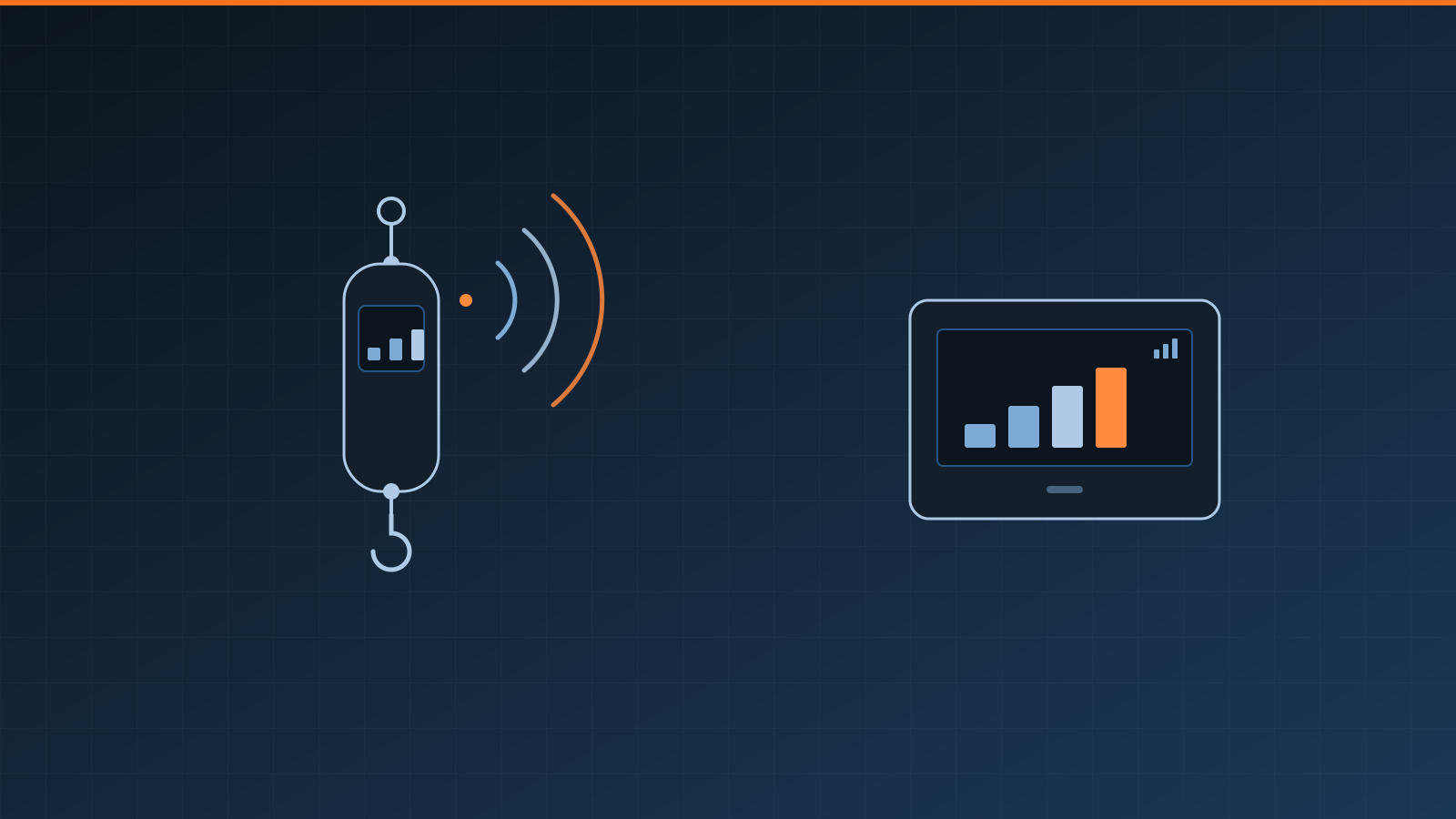
A wireless dynamometer is a force-measuring instrument that sends its readings to a separate handheld or remote display over a radio or Bluetooth link, instead of relying on a cable to a fixed indicator. The headline benefit is simple: the operator can read the force from a safe distance while the dynamometer hangs in the load path. The trade-offs — battery life, range and interference — are equally practical.
This guide explains how the wireless link works, where wireless dynamometers genuinely help, and the benefits and limitations to weigh before choosing one.
Key takeaways
- A wireless dynamometer transmits force readings to a remote or handheld display.
- The main advantage is operator distance from suspended or tensioned loads.
- Wireless does not reduce measurement accuracy — that still depends on the load cell and calibration.
- The real trade-offs are range, battery life and interference, plus link reliability.
- Calibration, inspection and safe-use rules are the same as for any dynamometer.
What a wireless dynamometer is
Functionally it is the same instrument described in our crane dynamometer guide: a load-bearing body with a load cell that measures force in the load path. The difference is the output. Rather than a fixed cabled indicator, the reading is sent wirelessly to:
- a handheld remote the operator carries;
- a base-station display in a control position;
- in some systems, a tablet or PC running the manufacturer’s software for logging.
Whether the instrument is optimised for weighing or for force measurement does not change how the wireless link behaves — that distinction sits with the device type, not the radio.
How the wireless link works
Most wireless dynamometers use one of two approaches:
- Licence-free radio (industrial ISM bands), favoured for longer range and robustness on busy sites.
- Bluetooth, common where the display is a nearby handheld, tablet or phone app.
In both cases the load cell signal is digitised inside the unit, then transmitted. The underlying force sensing is unchanged — only the path from instrument to display differs. Good systems include error checking so a corrupted packet is rejected rather than displayed, and clearly indicate when the link is lost.
Use cases where wireless helps
- Keeping operators clear of the load. During lifting or a load test, reading the force from a safe position supports the stored-energy precautions discussed in our dynamometer safety guide.
- Awkward sightlines. When the dynamometer hangs high on a crane or deep in a structure, a cabled display can be impossible to read; a remote solves it.
- Multi-point lifts. Several wireless units can feed one display, making it easier to monitor load distribution across lifting points in real time.
- Mobile and temporary work. No trailing cable to route, snag or damage on changing sites.
- Data logging. Many systems record readings for test documentation and later review.
Benefits
- Safety through distance from suspended or tensioned loads.
- Faster setup with no cable runs to plan or protect.
- Flexibility to position the display where it is actually useful.
- Multi-unit monitoring from a single point on complex lifts.
- Records for proof-test documentation, where the system supports logging.
Limitations to weigh
Wireless adds capability but also considerations a cabled instrument avoids:
- Battery dependence. Both the dynamometer and the remote need charge. Plan for shift-long use and carry spares or a charging method.
- Range and obstructions. Headline range figures assume open conditions. Steel, machinery and reinforced concrete cut real-world range, so verify performance on your site.
- Interference and congestion. Busy radio environments can affect some links. Reputable systems manage this, but it is worth checking in your setting.
- Link reliability. Decide what behaviour you need when the signal drops — a clear loss indication is far safer than a stale reading.
- Security and pairing. Make sure the remote is paired to the correct unit, especially when several dynamometers are in use nearby.
- Environmental rating. Confirm the IP rating and temperature range suit the work, and whether a hazardous-area-certified version is required.
Selecting a wireless dynamometer
Beyond the usual capacity, accuracy and environment criteria, focus on the wireless-specific points:
- Realistic range for your environment, not just the spec sheet.
- Battery life and how the unit is charged or powered.
- Link behaviour on signal loss and whether peak/hold data is retained.
- Number of units one display can manage, if you run multi-point lifts.
- Logging and export, if you need test records.
- Calibration and inspection support, which remain mandatory regardless of the wireless feature — the same traceable dynamometer calibration discipline applies.
Conclusion
A wireless dynamometer is, at heart, a normal force instrument with its display set free from a cable. That single change pays off most where operator safety, awkward sightlines or multi-point monitoring make a cabled readout impractical. The accuracy comes from the load cell and its calibration; the wireless decision is really about range, battery and link reliability for your specific site. Weigh those honestly, keep the same calibration and inspection discipline as any dynamometer, and the convenience is well worth having.
Frequently asked questions
What is the range of a wireless dynamometer?
It varies widely by technology and environment. Short-range links cover a work area, while licence-free radio links can reach much further in open conditions. Steelwork, machinery and other obstructions reduce real-world range, so confirm the figure for your specific site rather than relying on a headline number.
Are wireless dynamometers as accurate as wired ones?
The wireless link transmits the reading; it does not inherently reduce measurement accuracy. Accuracy depends on the load cell, electronics and calibration, just as with a wired instrument. The trade-offs of wireless are about range, battery and interference, not measurement quality.
What happens if the wireless signal drops out?
Well-designed systems indicate signal loss rather than showing a stale value, and many log or hold the last reading. You should still plan for dropouts: keep within reliable range, maintain line of sight where possible, and follow the manufacturer's guidance on what the display shows when a link is lost.
Do wireless dynamometers need different calibration?
No. They are calibrated as force instruments in the same way as wired dynamometers. The wireless feature does not change the calibration requirement or the need for periodic inspection.
Related guides
Crane Dynamometers Explained: Lifting, Load Testing and Industrial Uses
What a crane dynamometer is, how it works, and where it is used for lifting, proof loading and industrial force measurement — plus how to choose and use one safely.
Crane Scale vs Dynamometer: Key Differences and Use Cases
Crane scale vs dynamometer: both measure suspended force, but they are built for different jobs. Compare purpose, accuracy and use cases to choose the right tool.
What Is a Crane Scale? Uses, Safety and Buying Criteria
A crane scale weighs suspended loads on a hoist or crane. Learn how crane scales work, where they are used, key safety points and what to check before buying.