Dynamometer Safety Basics for Industrial Load Testing
Core dynamometer safety practices for industrial load testing: capacity and working load limits, rigging inspection, stored energy, exclusion zones and pre-test checks.
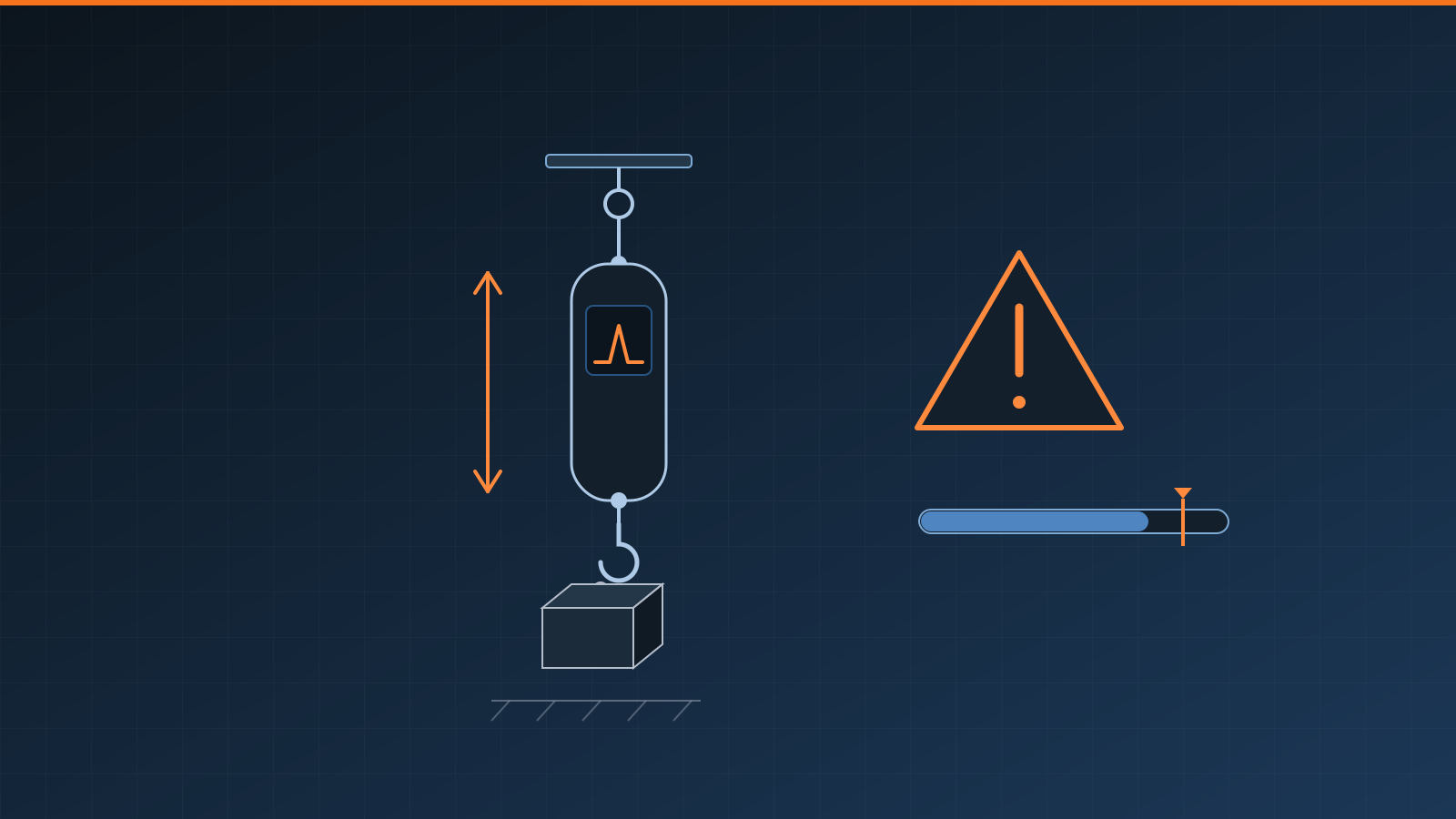
Dynamometers are routinely used to apply and measure force during industrial load testing — proof loading lifting gear, checking sling tension and verifying that structures or anchor points can take their rated load. Because those tests deliberately put large forces into a system, dynamometer safety is as much about controlling the load path and the people around it as it is about the instrument itself.
This guide sets out the core safety basics for using dynamometers in industrial load testing. It is general guidance, not a substitute for a competent person, the manufacturer’s instructions or the standards and regulations that apply to lifting and testing in your jurisdiction.
Key takeaways
- Respect both the capacity of the instrument and the working load limit of the rigging.
- Plan for dynamic and shock forces, which can far exceed the static load.
- Treat a tensioned system as stored energy and keep people out of the line of force.
- Inspect the dynamometer and rigging before use — inspection is separate from calibration.
- Follow recognised standards and a competent person; this article does not replace them.
Where dynamometers are used in testing
In an industrial setting, a dynamometer typically sits in the load path during:
- Proof load testing of lifting equipment, lifting beams, padeyes and slings.
- Tension measurement in lines, guy wires and rigging.
- Load distribution checks across multiple lifting points.
- Anchor, winch and bollard-pull testing, where a known force must be applied and recorded.
In all of these, the dynamometer is also a below-the-hook component carrying load, so it must be selected, rigged and inspected accordingly. For background on the instrument, see our crane dynamometer guide.
Capacity, working load limit and margin
Two limits matter, and they are not the same thing:
- Capacity is the maximum force the dynamometer can measure.
- Working load limit (WLL) is the maximum force the rigging and connections are rated to carry.
The safe limit for a given setup is the lower of the two, with margin left over. Test and dynamic forces can rise well above the static figure because of acceleration, snatch loading and the stiffness of what is being tested. Size the instrument and rigging so the expected peak sits comfortably within the rating — never plan to operate at the very top of capacity.
Stored energy: the hazard people underestimate
A load test stores energy in everything under tension — the line, the sling, the structure and the dynamometer. If a component fails or a connection releases, that energy is released suddenly and can throw broken parts or recoiling lines with great force.
Practical controls include:
- Establishing an exclusion zone and keeping personnel out of the line of force.
- Using barriers or physical protection where practical.
- Increasing load gradually and watching the readout, rather than applying force in steps that invite shock.
- Having a clear plan to release load safely if a test must be stopped.
Pre-use inspection
Inspection confirms the equipment is mechanically fit; it is distinct from the accuracy check provided by dynamometer calibration. Before a test, sensible checks include:
- Shackles, pins and connectors — correct type, rated, undamaged and properly seated.
- The dynamometer body and load cell — no cracks, corrosion or signs of previous overload.
- Hooks and safety latches, where fitted.
- Display, battery and any wireless link — working reliably so the operator can read the force from a safe position.
- Certification status — calibration in date and any required periodic examination complete.
If anything is doubtful, do not use the equipment until it has been assessed.
During the test
- Confirm everyone is briefed and clear of the load path.
- Apply force smoothly and watch for the target force and any peak the procedure requires.
- Stop immediately if readings behave unexpectedly — non-linear response, a reading that will not settle, or a sudden change can indicate a problem.
- Record the result against the acceptance criteria defined by your procedure or the relevant standard.
After the test
- Release the load in a controlled way.
- Re-inspect the dynamometer and rigging, especially after a high-force or peak test.
- If an overload or shock event is suspected, take the instrument out of service for inspection and recalibration before reuse.
- Keep records of the test, the equipment used and its calibration status.
Standards and competent persons
Below-the-hook lifting devices and load testing are governed by recognised standards and regulations — for example, ASME B30.20 for below-the-hook lifting devices in the United States, or regulations such as LOLER in the United Kingdom. Which apply depends on your location and the work. These standards, the equipment manufacturer and a competent lifting person are the authority for test forces, acceptance criteria and inspection regimes. Treat the points above as general awareness, and confirm specifics against those sources and your site’s safety and compliance procedures.
Conclusion
Safe dynamometer use in load testing comes down to a few disciplined habits: stay within both capacity and working load limit, respect dynamic forces, treat tension as stored energy, inspect before and after, and follow the standards and competent person who own the test. The instrument measures the force — your procedure and controls keep the people around it safe.
Frequently asked questions
What is the difference between capacity and working load limit on a dynamometer?
Capacity is the maximum force the instrument is built to measure. The working load limit (WLL) is the maximum force its rigging and connections are rated to carry in service. Both must be respected, and the lower of the two governs a given setup. Always include a margin for dynamic and shock forces.
Why is stored energy dangerous during a load test?
A tensioned line, sling or structure stores significant elastic energy. If something fails or releases suddenly, that energy is released as fast, forceful movement. Keeping people out of the line of force and behind suitable barriers reduces the risk of injury.
Do dynamometers need inspection as well as calibration?
Yes. Calibration confirms measurement accuracy; inspection confirms mechanical fitness for use. As a below-the-hook device, a dynamometer and its rigging typically need periodic examination by a competent person under the rules that apply where it is used.
Can I use a dynamometer beyond its rated capacity for a one-off test?
No. Exceeding rated capacity risks sudden failure and can damage the instrument even if nothing breaks immediately. If a test needs more force, use equipment rated for it.
Related guides
Scale Verification: What It Means and How to Plan It
Learn what scale verification confirms, how it differs from calibration, adjustment and inspection, and how to plan defensible quality or trade checks.
Lifting Equipment Inspection: A Practical Guide
Learn how lifting equipment inspection works, what to check before use, when competent-person examination is needed, and which records to retain.
NTEP-Certified Scales: What Certification Means
Learn what NTEP certification means for a scale, what a Certificate of Conformance covers, and what US buyers must verify before installation and use.