What Is a Crane Scale? Uses, Safety and Buying Criteria
A crane scale weighs suspended loads on a hoist or crane. Learn how crane scales work, where they are used, key safety points and what to check before buying.
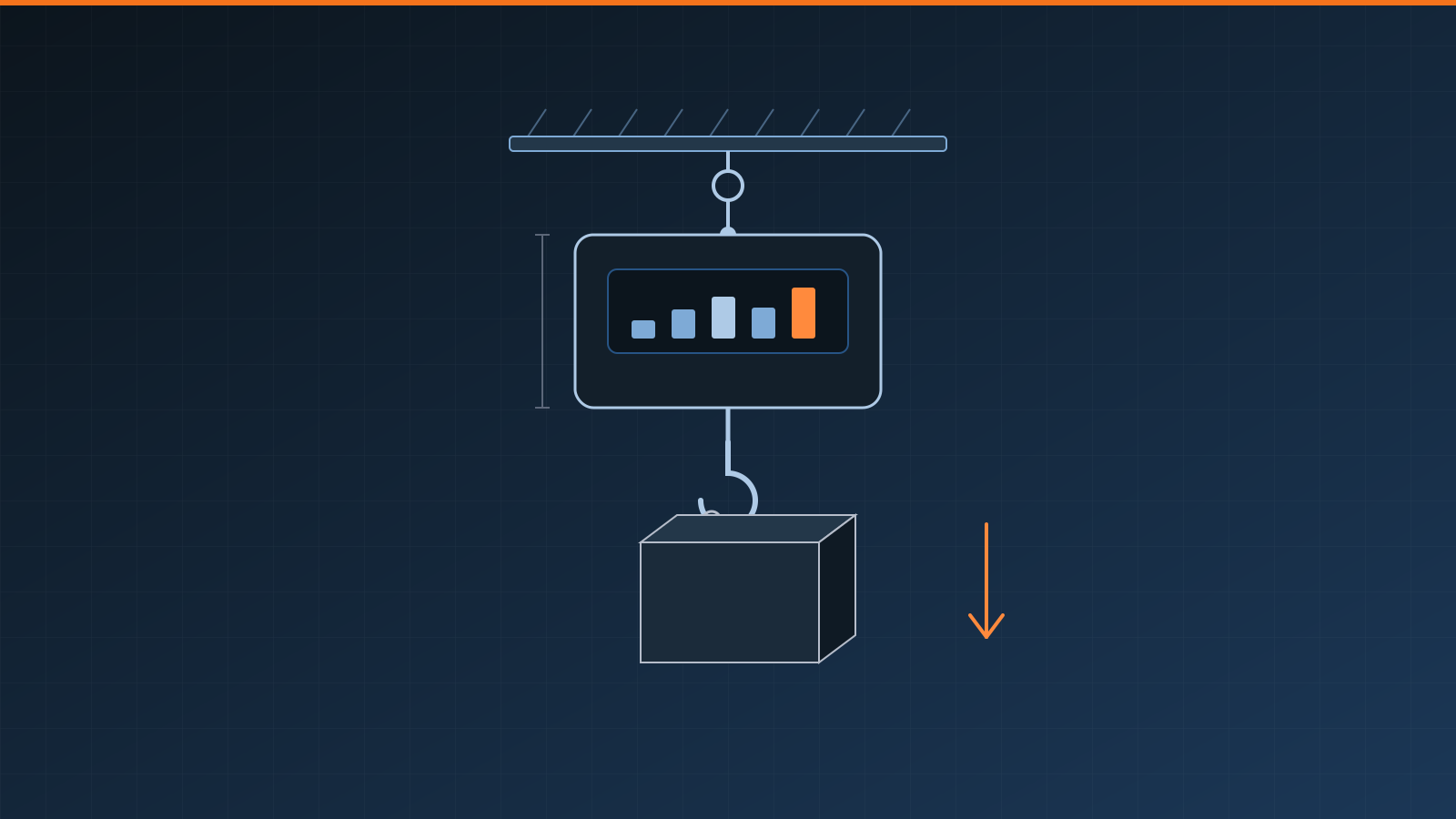
A crane scale is a weighing device that hangs between a lifting point — a crane hook, hoist or gantry — and the load being lifted, so the weight is measured while the load is suspended in the air. For operations that move heavy or awkward items, it removes the need to set a load down on a platform scale just to find out what it weighs.
This guide explains how crane scales work, where they are typically used, the safety considerations that matter most, and the criteria worth checking before you buy.
Key takeaways
- A crane scale measures the weight of a load while it is suspended from a hook or hoist.
- Most modern units use one or more load cells to convert force into a digital readout.
- They are widely used in steel, scrap, manufacturing, ports, fishing and maintenance work.
- Safety depends on never exceeding the rated capacity and following recognised lifting practice.
- Capacity, resolution, environment rating and whether the reading must be legal-for-trade are the main buying factors.
How a crane scale works
A crane scale sits in the load path. At the top is a shackle, hook or eye that connects to the lifting equipment; at the bottom is a hook or shackle that carries the load. Inside the body, a load cell — a precision sensor — deflects very slightly under the applied force. That tiny deformation changes an electrical signal, which the electronics convert into a weight value shown on a display.
Because the entire load passes through the device, a crane scale is technically a below-the-hook lifting device as well as a measuring instrument. That dual role is why both metrological accuracy and mechanical safety matter.
Mechanical versus digital crane scales
- Mechanical (dial) crane scales use a spring and gear mechanism. They are simple, need no batteries and tolerate rough handling, but are generally less precise and harder to read at a distance.
- Digital crane scales use load cells and an electronic display. They offer better resolution, features such as tare and peak hold, and often a remote or wireless readout.
Common uses
Crane scales are valued wherever a load is already on a hook and stopping to use a floor scale would be impractical. Typical applications include:
- Scrap and recycling yards — weighing skips, bales and mixed loads on overhead cranes.
- Steel and metal fabrication — checking coil, plate and billet weights during handling.
- Manufacturing and assembly — verifying component or batch weights in process.
- Ports, shipping and fishing — weighing catches, nets and containerised goods.
- Maintenance and plant work — confirming the weight of motors, pumps or assemblies before a lift.
In many of these settings the weight reading supports both process control (is this batch correct?) and lifting safety (are we within the crane’s rated capacity?).
Safety considerations
Crane scales carry a load overhead, so safety is not optional. The points below are general guidance; always follow the manufacturer’s instructions and your site’s lifting procedures.
- Respect the rated capacity. Every crane scale has a maximum capacity and, separately, a working load limit for its rigging. Overloading risks sudden failure.
- Inspect the rigging. Hooks, shackles and swivels should be rated, undamaged and correctly seated. Pair the scale with load cells and lifting components that suit the duty.
- Never lift people, and keep personnel clear of suspended loads.
- Use safety latches on hooks and check that the load is balanced before lifting.
- Schedule inspection and recalibration. Mechanical wear and shock loading can affect both safety and accuracy over time.
For anything safety-critical, the design and use of below-the-hook lifting devices is covered by recognised standards (for example, in some jurisdictions, ASME B30.20). Treat those standards and a competent lifting authority as the final word, not a general guide like this one.
Buying criteria
When comparing crane scales, focus on how the device will actually be used rather than headline price alone.
Capacity and safety margin
Choose a capacity comfortably above your heaviest routine load, leaving margin for dynamic forces during a lift. Do not size the scale exactly to your maximum expected weight.
Resolution and accuracy
Resolution is the smallest weight increment the display shows. A 5,000 kg scale reading in 1 kg steps is far more precise than one reading in 5 kg steps. Match the resolution to how tight your tolerances really are — higher precision is not always necessary and can cost more.
Legal-for-trade requirements
If you buy or sell goods by weight using the scale, the reading may need to be legal-for-trade (type-approved and verified under your local metrology rules, such as OIML-based regulations). Confirm this before purchase, because non-approved instruments cannot be used for commercial transactions.
Operating environment
- Ingress protection (IP rating) for dust, water and washdown.
- Temperature range for cold stores or hot processes.
- Hazardous areas, which may require certified intrinsically safe equipment.
Practical features
- Wireless or remote display so the operator can read the weight from a safe distance.
- Battery life and charging method for shift-long use.
- Peak hold, tare and unit switching to suit the workflow.
- Build quality — overload protection, robust housing and a clear, high-contrast display.
Frequently asked questions
How accurate is a crane scale? Industrial digital crane scales are typically accurate to a fraction of a percent of capacity, but the real figure depends on the model, calibration and conditions. If accuracy is critical, check the manufacturer’s specification and keep the scale calibrated.
Do crane scales need calibration? Yes. Like any weighing instrument they drift over time and after shock loading. Calibration frequency depends on use, accuracy needs and any legal requirements.
Can a crane scale be used for trade? Only if it is type-approved and verified for legal-for-trade use under your local rules. Many general-purpose crane scales are not approved for trade and are intended for internal control only.
What is the difference between a crane scale and a dynamometer? They overlap, but a dynamometer is primarily a force-measuring instrument used for load testing and tension measurement, while a crane scale is optimised for reading the weight of suspended loads. The distinction matters when choosing equipment for lifting versus testing.
Related guides
Wireless Dynamometers: Use Cases, Benefits and Limitations
What a wireless dynamometer is, how the wireless link works, where it helps, and the practical benefits and limitations to weigh before choosing one.
Crane Dynamometers Explained: Lifting, Load Testing and Industrial Uses
What a crane dynamometer is, how it works, and where it is used for lifting, proof loading and industrial force measurement — plus how to choose and use one safely.
Crane Scale vs Dynamometer: Key Differences and Use Cases
Crane scale vs dynamometer: both measure suspended force, but they are built for different jobs. Compare purpose, accuracy and use cases to choose the right tool.