Truck Scale Maintenance: Inspection and Service Checklist
Use this truck scale maintenance checklist to inspect drainage, deck gaps, load cells, cables, grounding, approaches, and software while planning service.
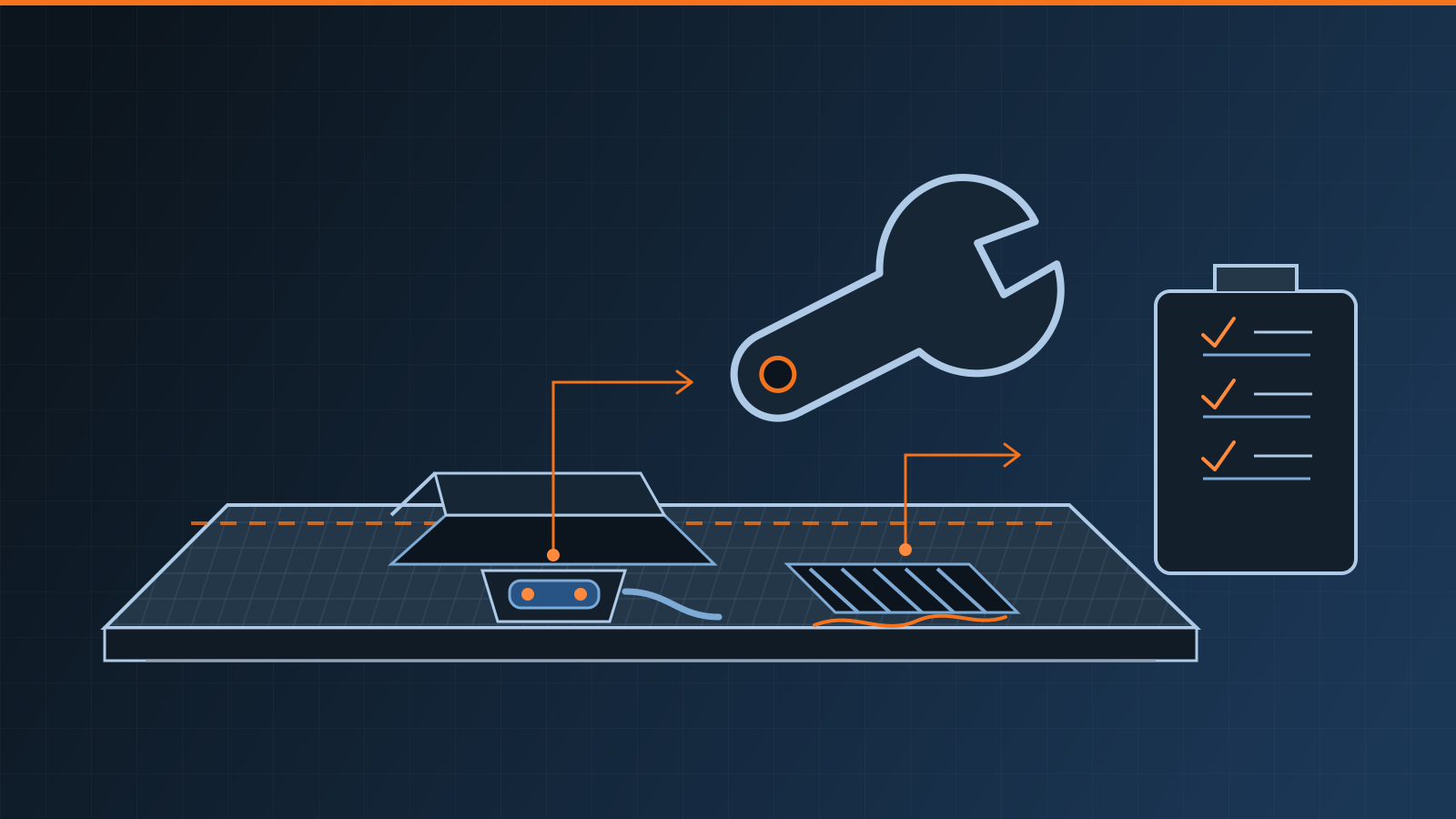
Truck scale maintenance is the planned cleaning, servicing, and repair needed to keep the complete weighing system safe, available, and reliable. It should cover the deck or pit, drainage, load cells, cables, grounding, approaches, indicator, peripherals, and software—not only the visible platform. A practical program combines frequent operator observations with scheduled inspection, qualified preventive service, calibration, and legal verification where required.
Key takeaways
- Maintenance, inspection, calibration, and verification are related but different activities.
- Debris, water, damaged approaches, restricted deck movement, and cable faults can create weighing problems.
- A maintenance frequency should be risk-based; no single interval fits every truck scale.
- Record as-found conditions, work completed, parts replaced, and post-service checks.
- Do not adjust a scale to hide a mechanical, foundation, drainage, or electrical problem.
- Use qualified providers for technical work, calibration, and regulated components.
Maintenance, inspection, calibration, and verification
Using the terms correctly helps prevent gaps in responsibility.
| Activity | Primary purpose | Typical output |
|---|---|---|
| Inspection | Observe condition, hazards, damage, movement, and basic function | Checklist, photos, fault report, or work request |
| Maintenance | Prevent deterioration or restore mechanical, electrical, and software function | Cleaning, repair, replacement, service record, and functional test |
| Calibration | Compare indications with traceable reference loads and document measurement error | As-found and as-left results, uncertainty or method details, and calibration record |
| Verification | Confirm that a regulated instrument complies with applicable legal-metrology requirements | Official test result, marking, seal, or status required by the jurisdiction |
Calibration does not clean a blocked drain or repair a deteriorated approach. Maintenance does not establish measurement traceability. Verification is not a generic synonym for an internal function check. One visit may include several activities, but the scope and records should identify each one.
For more detail on reference-load testing and legal status, see the weighbridge calibration guide.
Why truck scales need whole-system maintenance
A truck scale repeatedly receives concentrated axle loads while exposed to dirt, aggregate, water, ice, salt, temperature changes, vibration, and sometimes corrosive material. Debris can bridge the deck to surrounding concrete. Standing water can affect steelwork, connectors, junction areas, and foundations. Damaged approaches can cause vehicle bounce or impact loading before the truck is fully on the deck.
The measurement chain also extends beyond the structure. Load-cell signals travel through cables and junction equipment to an indicator, then often into ticketing software, printers, barriers, traffic lights, cameras, and business systems. A stable weight is not useful if the wrong vehicle receives it, and a working computer does not prove the scale is mechanically free or accurate.
Preventive work should therefore address physical condition, measurement function, transaction integrity, and safe vehicle movement.
Truck scale maintenance checklist
Use this as a planning checklist, then adapt it to the scale design, manufacturer instructions, site hazards, and authorized staff roles.
Area around the scale
- Keep approaches free of potholes, settlement, loose material, ice, and abrupt transitions
- Check curbs, guide rails, barriers, signs, lights, and lane markings for damage
- Confirm vehicles can approach straight and stop fully on the deck without striking equipment
- Look for foundation cracks, movement, exposed reinforcement, or erosion
- Keep drainage paths, grates, sumps, pumps, and discharge points clear and functional
- Investigate standing water, recurring sediment, washout, or evidence of flooding
Approaches are part of weighing performance. A truck that bounces, turns sharply, brakes hard, or rests partly off the deck can produce an unreliable transaction even when the weighing electronics are working.
Deck, pit, and gaps
- Remove mud, stone, spilled product, snow, and other buildup using an approved safe method
- Check that deck-to-foundation and module gaps are clear and consistent
- Look for contact points that restrict free movement of the deck
- Inspect accessible deck surfaces, weld areas, concrete, fasteners, covers, and access panels
- Note unusual movement, impact, rubbing, noise, corrosion, cracking, or deformation
- Keep pit access secured and follow site rules for restricted or confined spaces
Never enter a pit, remove covers, lift modules, or work near moving traffic without the required isolation, access controls, and competent personnel. Do not direct high-pressure water or tools at sensitive components unless the manufacturer and site procedure permit it.
Load cells and mechanical supports
- Visually inspect accessible load cells, mounts, restraints, check rods, and anti-rotation components
- Look for corrosion, impact, displaced hardware, binding, contamination, or damaged seals
- Confirm the deck appears centered and mechanically free within its intended movement
- Escalate evidence of overloading, lightning damage, settlement, or vehicle impact
- Have qualified technicians investigate unstable zero, corner differences, or repeatability concerns
Load-cell replacement and mechanical adjustment affect system performance and may affect legal seals or approval. Follow the manufacturer’s procedure and complete appropriate testing afterward.
Cables, grounding, and electrical equipment
- Check visible cable routes for crushing, cuts, abrasion, loose conduit, rodent damage, and water entry
- Inspect accessible junction enclosures, glands, connectors, and covers for physical damage
- Confirm grounding and surge-protection connections are intact where visual inspection is authorized
- Review indicator warnings, unstable readings, blank displays, and intermittent communications
- Check enclosure seals, ventilation, power protection, and environmental condition
- Arrange qualified testing after lightning, flooding, electrical work, or repeated unexplained faults
Grounding and surge systems should be evaluated against the equipment and site design, not improvised. Electrical isolation, testing, and repairs belong to authorized personnel.
Indicator, software, and peripherals
- Confirm the scale returns to zero under the approved empty-scale conditions
- Test normal gross, tare, net, reweigh, void, and correction workflows
- Verify vehicle IDs, timestamps, ticket numbering, printers, cameras, barriers, and traffic lights
- Review user accounts, audit logs, failed integrations, storage, and system alerts
- Complete backups and periodically test restoration according to the IT plan
- Document software, firmware, configuration, and interface changes
- Test the approved outage and manual fallback procedure
Software maintenance cannot be separated from control of weight records. The weighbridge software selection guide explains audit trails, resilience, integrations, and exception handling in more detail.
Warning signs that need prompt investigation
Stop relying on routine transactions and escalate when readings are unstable, the empty scale does not return consistently to zero, repeat weights differ unexpectedly, or the result changes with vehicle position. Other warnings include a deck that rubs or rocks, standing water near components, broken concrete, exposed or damaged cable, unusual indicator messages, intermittent data, and evidence of collision or overload.
A quick zero adjustment is not a substitute for diagnosis. Mechanical binding, foundation movement, moisture, connection faults, or load-cell damage can remain hidden after an apparent adjustment. When safety, trade, billing, or compliance is affected, place the scale under the site’s hold procedure until qualified personnel establish that it is fit for use.
Setting a maintenance schedule without a universal interval
Build frequency from risk rather than copying a calendar from another site. Consider:
- vehicle count, axle loads, impact loading, and operating hours;
- pit-mounted or above-ground construction and access;
- rain, flooding, snow, road salt, dust, aggregate, waste, or corrosive exposure;
- past drift, service calls, drainage problems, and component failures;
- legal-for-trade obligations and internal quality-system requirements;
- manufacturer guidance, warranty terms, and qualified provider recommendations;
- available redundancy and the operational cost of an unexpected shutdown.
Frequent housekeeping and visual operator checks can sit alongside less frequent detailed technical inspections. Increase attention after severe weather, flooding, lightning, collision, civil work, unusual loads, or a suspicious reading. Review trends annually or after significant failures and change the plan when evidence shows the current frequency is inadequate or unnecessarily burdensome.
Service records and provider scope
Each service record should identify the scale, date, technician or operator, as-found condition, observed faults, work completed, parts used, settings changed, safety holds, and post-work functional results. Keep calibration and official verification documents distinguishable but linked to the same asset history.
When requesting maintenance proposals, specify scale design, component information, traffic pattern, access restrictions, known faults, cleaning responsibilities, calibration needs, response expectations, and after-hours requirements. Ask who can work on sealed or regulated components and what testing follows a repair.
This checklist is general guidance, not a substitute for manufacturer procedures, qualified technicians, safe-work controls, or legal-metrology requirements. A defensible maintenance program keeps the structure free, the site drained, the signal path protected, the transaction system controlled, and the measurement independently checked at intervals justified by actual risk.
Frequently asked questions
How often should a truck scale be maintained?
There is no universal interval. The schedule should reflect traffic, loading, environment, drainage, failure history, manufacturer guidance, legal requirements, and the consequence of downtime or weighing error. Daily operator observations may be combined with risk-based preventive service by qualified technicians.
Is truck scale maintenance the same as calibration?
No. Maintenance preserves or restores equipment condition, while calibration compares readings with traceable reference loads and documents error. Inspection looks for condition or function problems, and legal verification confirms compliance with the jurisdiction's requirements where applicable.
What are common signs that a truck scale needs service?
Warning signs include failure to return to zero, unstable or inconsistent readings, repeat-weight differences, unusual noises or deck movement, visible debris in gaps, standing water, cable damage, corrosion, indicator faults, and intermittent communication. Remove the scale from consequential use when reliability or safety is uncertain.
Can site staff clean and inspect a truck scale?
Trained site staff can usually perform authorized visual checks and routine housekeeping under a safe procedure. Adjustment, electrical testing, confined or restricted access, lifting, welding, load-cell work, calibration, and sealed legal-for-trade components should be handled by qualified personnel as applicable.
Related guides
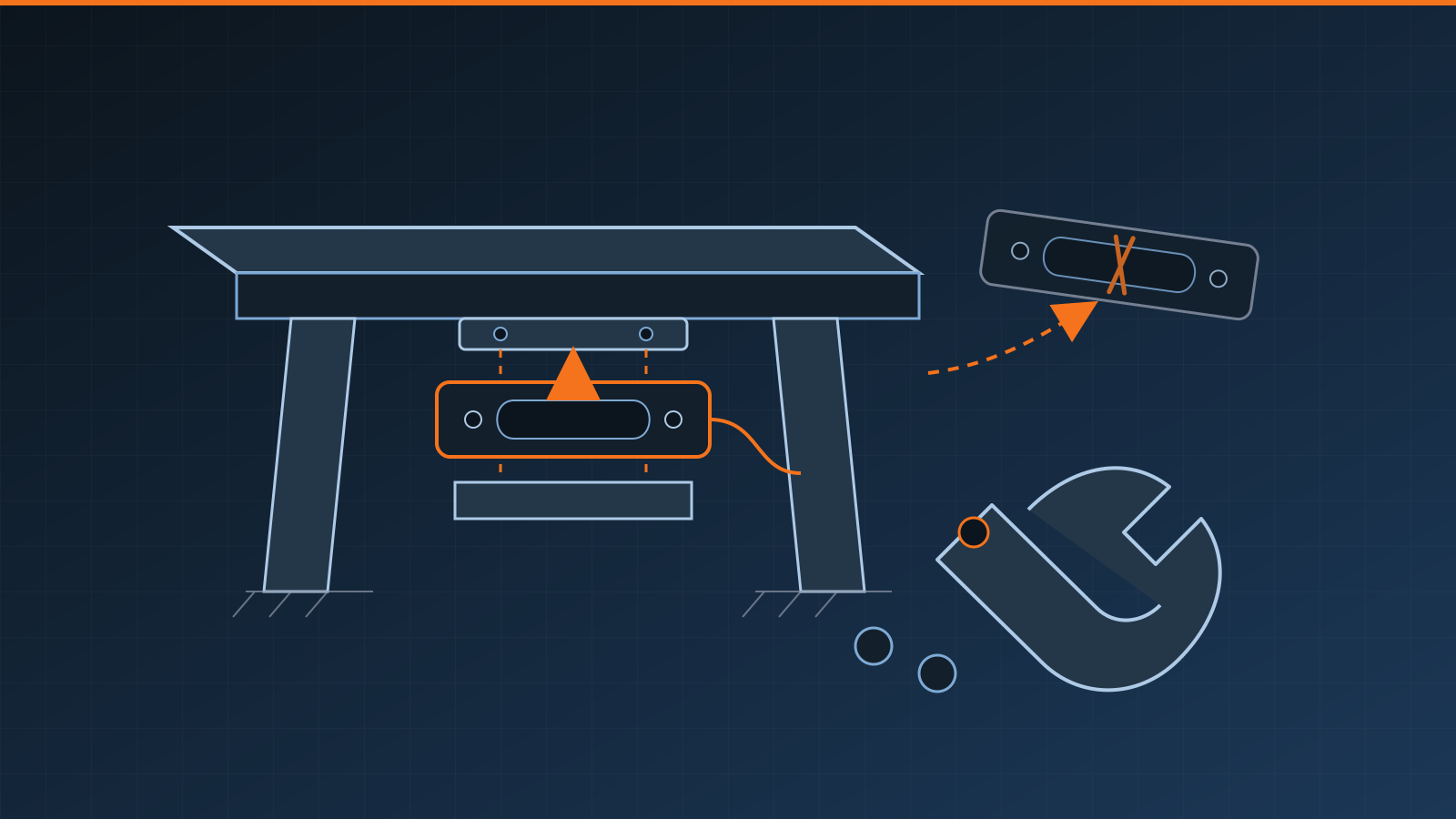
Load Cell Replacement: Selection, Installation and Calibration
Plan a safe load cell replacement: confirm the fault, match mechanical and electrical requirements, install correctly, then calibrate and verify the scale.
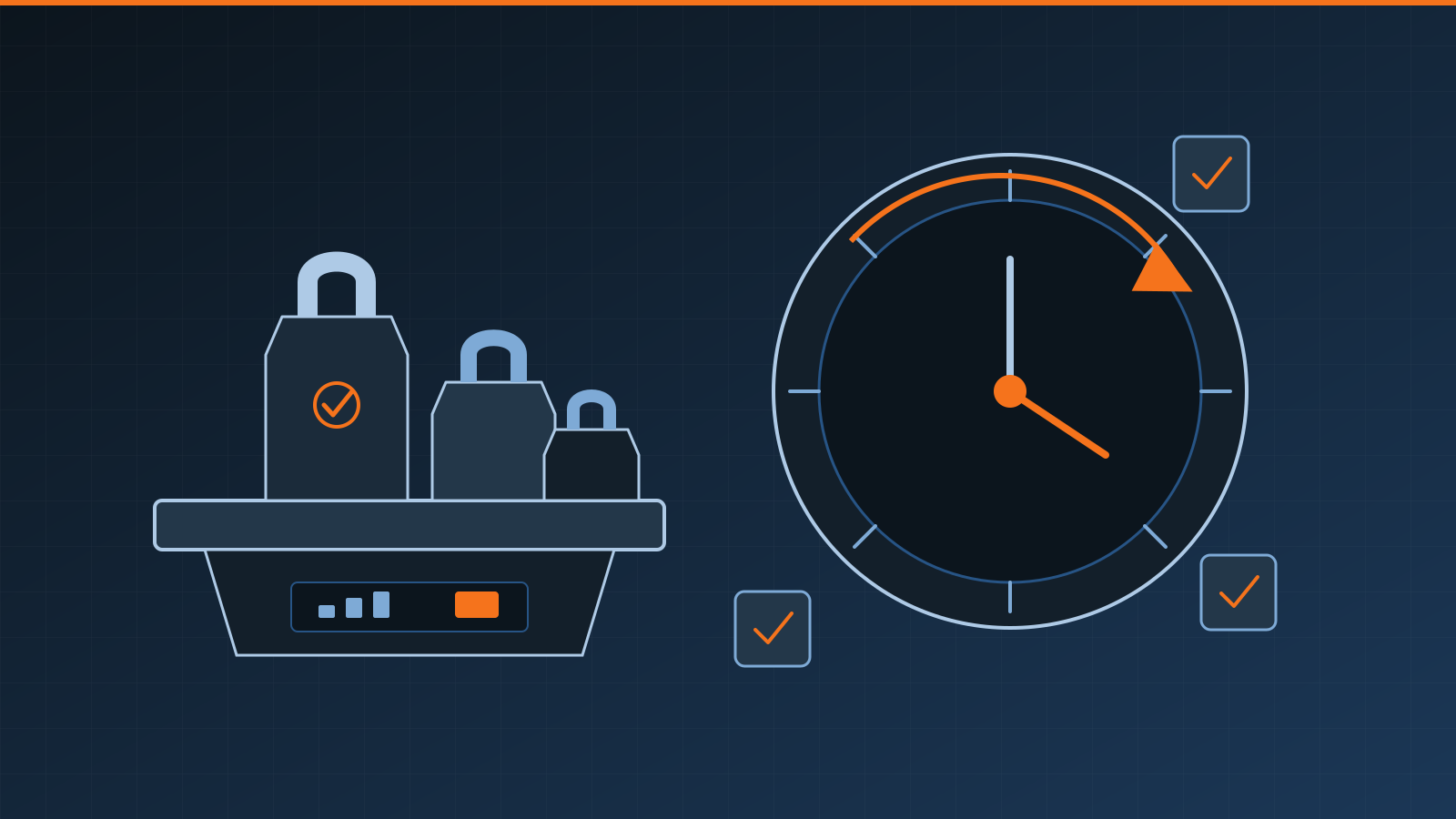
Scale Calibration Frequency: How to Set the Right Interval
Learn how often to calibrate a scale using a risk-based interval based on use, impact, drift, environment, regulations and documented performance history.
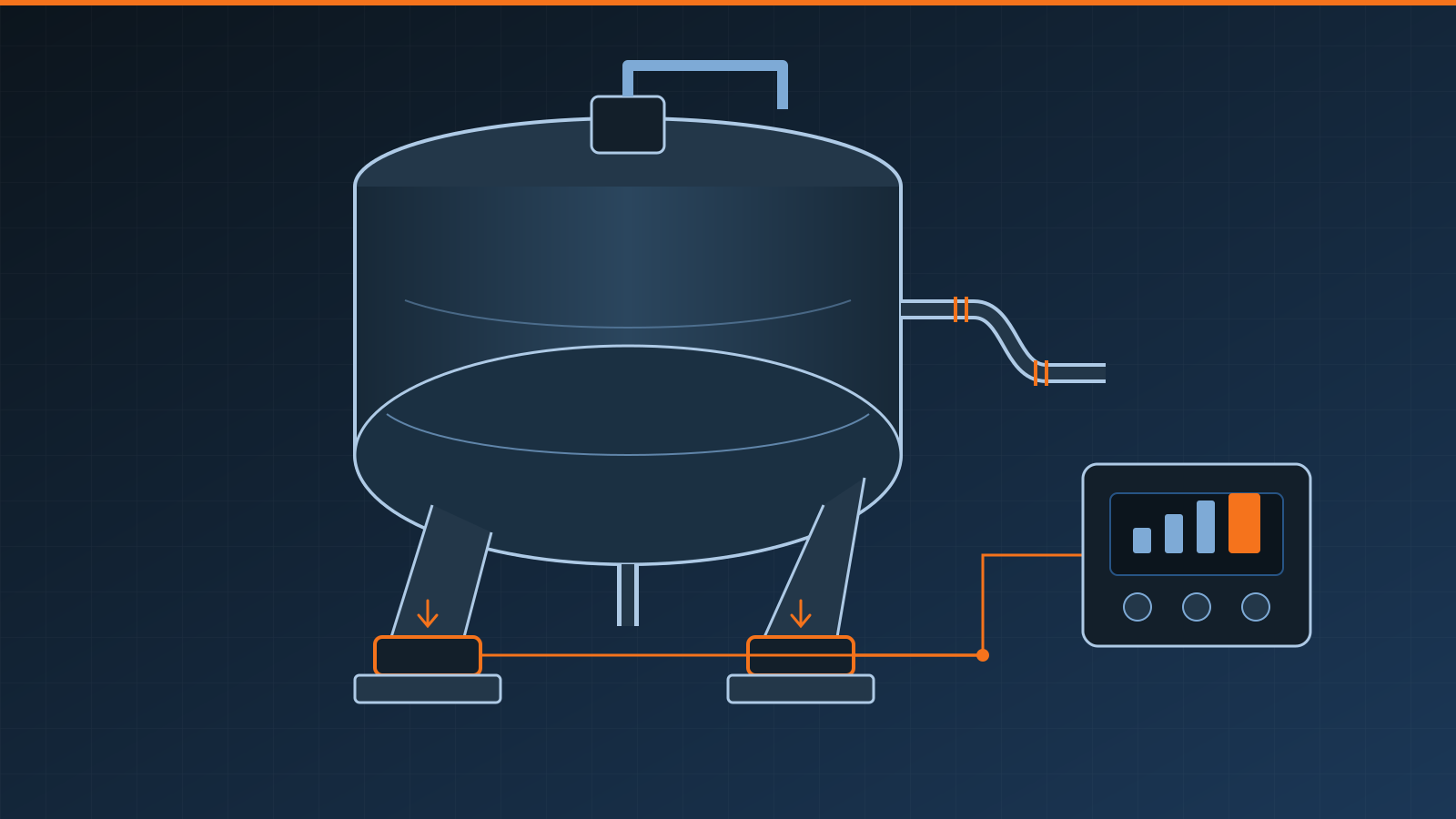
Tank Weighing System: Components, Installation, and Selection
Learn how a tank weighing system works, which components it needs, how piping and agitation affect readings, and how to plan installation and calibration.