Weighbridge Calibration: Process, Frequency and Compliance
How weighbridge (truck scale) calibration works: the test-weight process, how often to calibrate, verification for trade, and the records that keep it compliant.
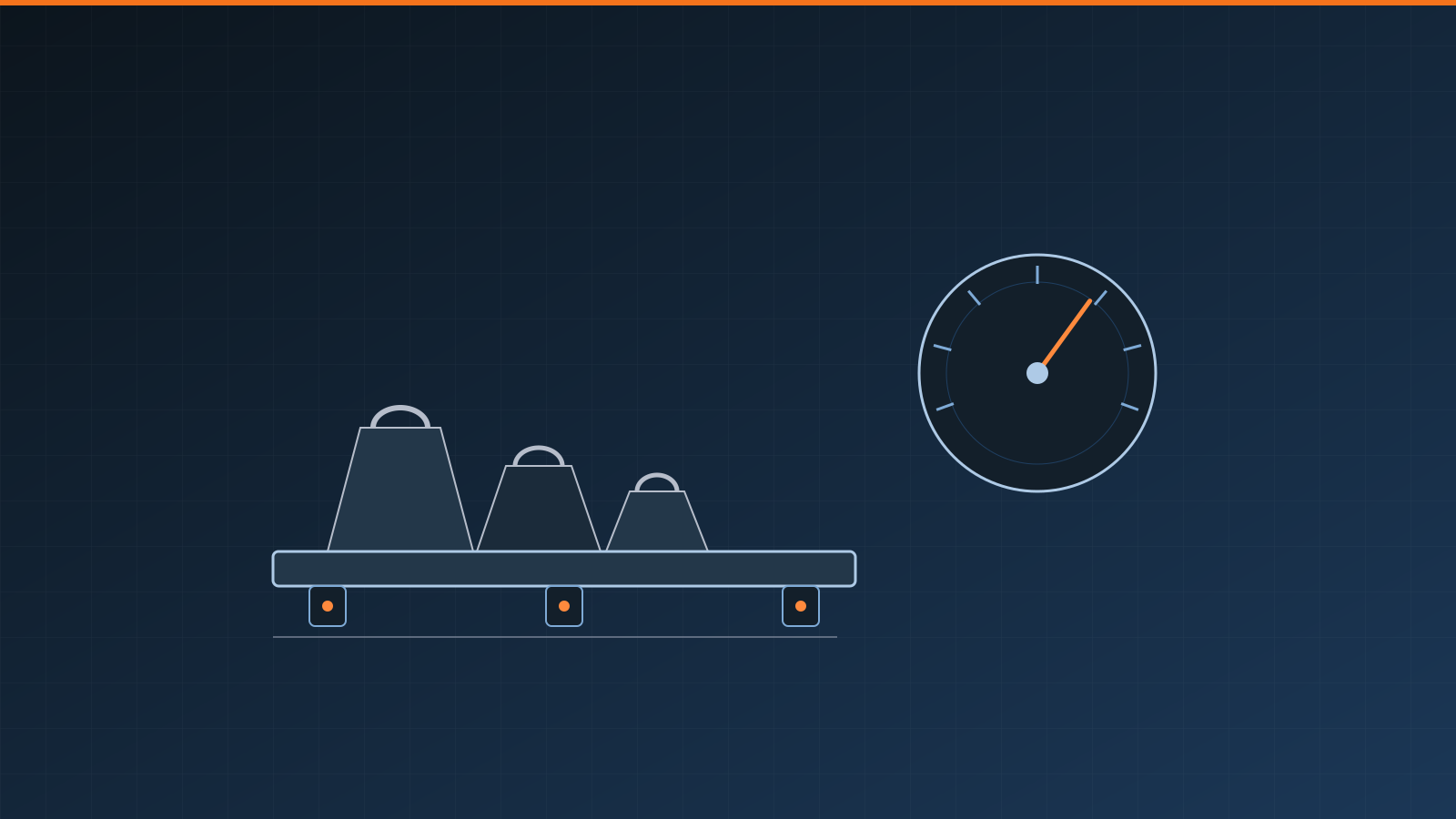
Weighbridge calibration is the process of checking a truck scale’s readings against certified test weights across its range, documenting the errors and, where necessary, adjusting the instrument. Because a weighbridge is large, high-capacity and usually used for commercial transactions, calibration is what keeps its readings both trustworthy and — where required — legally valid.
This guide explains the calibration process, how to think about frequency, and how verification for trade fits in. It is general guidance; your intervals and methods should follow the manufacturer’s instructions, your quality system and the legal-metrology rules that apply where you operate.
Key takeaways
- Calibration checks a weighbridge’s accuracy across its range, not at one point.
- It uses certified test weights, often with a substitution method to reach capacity.
- It also checks eccentricity (position sensitivity) and repeatability.
- Frequency depends on use, environment, history and legal reverification rules.
- For trade, calibration is paired with verification, which applies the legal markings.
Why weighbridges need calibration
A weighbridge is exposed to heavy, repeated loading, weather, ground movement and the gradual ageing of its load cells. Any of these can shift readings over time. Because the numbers usually drive billing and compliance with axle and gross-weight limits, an undetected error is both a commercial and a legal risk. Calibration is how you catch and correct that drift — the same as-found/as-left discipline described in our crane scale calibration guide, applied to a much larger instrument.
The calibration process
A calibration by a competent provider typically covers several stages.
As-found check
Certified test weights are applied and the weighbridge readings are recorded before any adjustment, across several points of the range. This shows how the instrument was performing in service.
Building up to capacity — the substitution method
Placing full-capacity certified weights on a large deck is impractical, so calibration often uses substitution:
- Place a set of certified test weights and record the reading.
- Replace them with material of equal indicated weight (for example, a loaded vehicle).
- Add the certified weights again on top and record.
- Repeat in steps up toward capacity.
This builds a picture of accuracy across the full range using a manageable quantity of certified weights.
Eccentricity and repeatability
- Eccentricity test — the same load is placed at different positions on the deck to confirm the reading does not change with position.
- Repeatability — the same load is applied several times to confirm consistent readings.
Adjustment and as-left record
If the weighbridge is outside tolerance, it is adjusted, and final as-left readings are recorded. A calibration certificate documents the reference weights and their traceability, the applied loads, the results, the tolerance and the conditions.
How often to calibrate
The right interval depends on application, jurisdiction, manufacturer recommendations and operating conditions. The same risk-based method applies across weighing equipment; our scale calibration frequency guide shows how to document an interval instead of copying a universal calendar rule.
- Legal use. For trade, a reverification interval is set by local law and is not optional.
- Duty and environment. Heavy traffic, harsh weather and ground conditions shorten sensible intervals.
- History. Stable results may justify extending intervals within legal limits; drift means tightening them.
An annual calibration is a common baseline, supported by routine in-house checks — a known-weight vehicle or a zero and return check — between formal calibrations.
Calibration versus verification
For a legal-for-trade weighbridge, two things run together:
- Calibration measures and documents accuracy against a traceable standard.
- Verification confirms the instrument meets legal requirements and applies the legal markings and seals.
Both are usually required for trade. Keep the calibration certificates and verification records together — they demonstrate due diligence, support audits and reveal drift trends that inform your interval.
Conclusion
Weighbridge calibration keeps a high-value, high-consequence instrument honest: certified test weights across the range, a substitution method to reach capacity, eccentricity and repeatability checks, and a clear certificate. Pair it with verification where trade requires, set the interval from risk and regulation, and back it with simple in-house checks — and the weight on the ticket stays one you can defend.
Frequently asked questions
How often should a weighbridge be calibrated?
It depends on use, traffic, environment and — for trade use — the reverification interval set by local metrology law. Many operators calibrate at least annually and add routine in-house checks between calibrations. Treat any single figure as a starting point to refine with evidence and regulation.
How is a weighbridge calibrated?
A calibration applies known certified test weights across the deck, comparing the indicated weight to the reference at several points, and checks eccentricity (how the reading changes as the load sits in different positions) and repeatability. Errors are recorded as-found and, if needed, adjusted, then recorded as-left.
What is a substitution test on a weighbridge?
Because it is impractical to place full-capacity test weights on a large deck, calibration often uses a substitution method: a set of certified weights is placed, then replaced by material (such as a loaded truck) of equal indicated weight, and more test weights are added, building up to capacity in steps.
Is weighbridge calibration the same as verification?
No. Calibration measures and documents accuracy against a traceable standard. Verification, for legal-for-trade use, confirms the instrument meets the legal requirements and applies the legal markings. A trade weighbridge generally needs both, under the rules of its jurisdiction.
Related guides
Scale Calibration Frequency: How to Set the Right Interval
Learn how often to calibrate a scale using a risk-based interval based on use, impact, drift, environment, regulations and documented performance history.

Calibration Test Weights: Selection, Classes and Care
Learn how to select calibration test weights by scale capacity, tolerance, class and jurisdiction, then protect traceability through proper handling and storage.

Scale Calibration Certificate Explained: What to Look For
What a scale calibration certificate is, what a good one contains, how to read as-found and as-left results, and why traceability and uncertainty matter.