Forklift Scales: How They Work, Accuracy and Buying Criteria
How forklift scales weigh loads on the forks, what affects their accuracy, the main types, and the criteria to check before buying one for a warehouse.
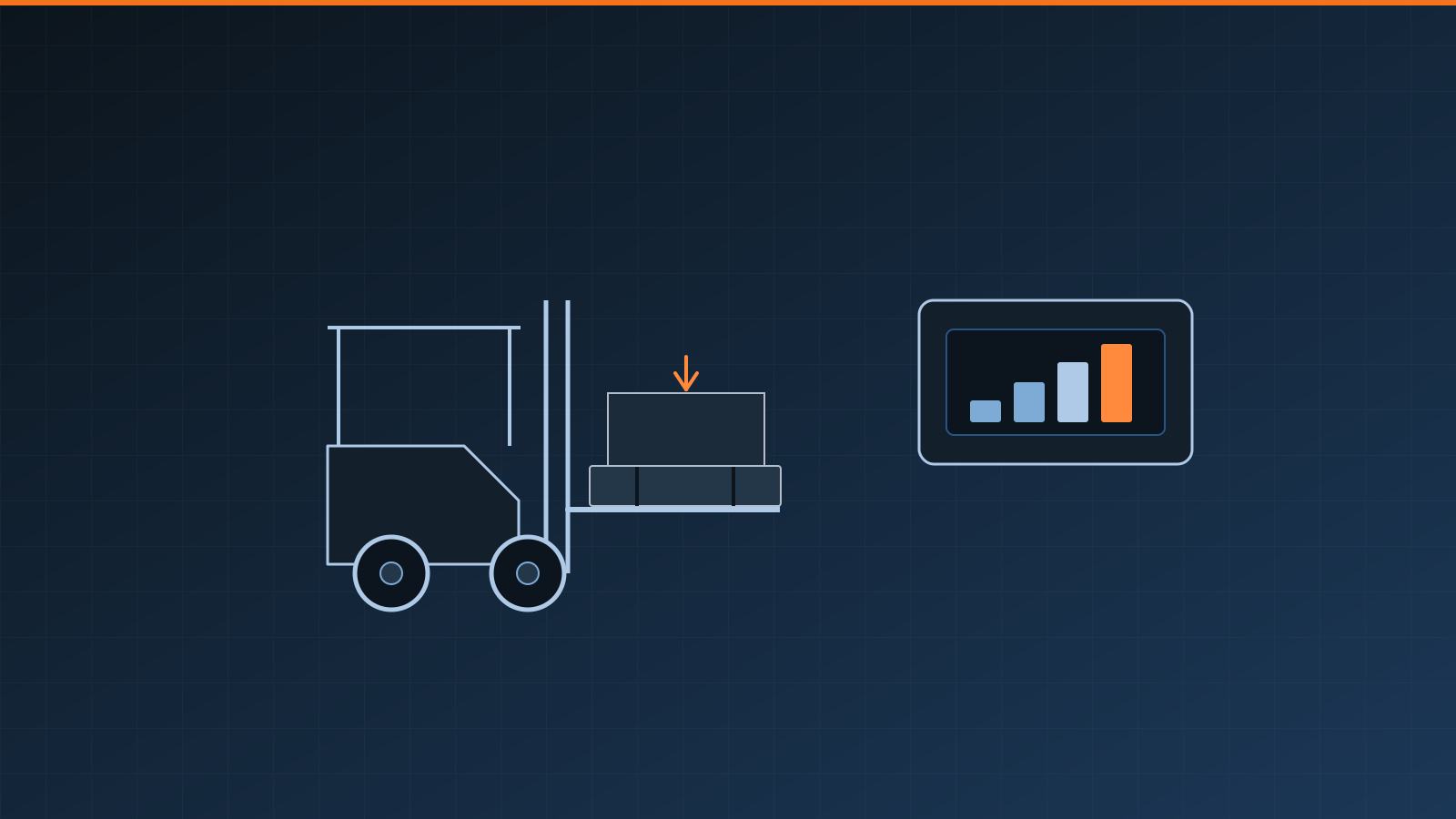
A forklift scale weighs a load directly on the forks as the truck lifts or moves it, so operators can capture a weight without stopping to set the load down on a floor scale. For busy warehouses and logistics operations, that saves handling steps and captures weight data at the point the goods are already being moved.
This guide explains how forklift scales work, what affects their accuracy, the main types available, and the criteria worth checking before buying. It sits within our broader warehouse weighing coverage.
Key takeaways
- A forklift scale weighs the load on the forks during normal handling.
- It trades some accuracy for speed, because weighing happens on a moving machine.
- The main types are hydraulic, load-cell carriage, and integrated systems.
- Accuracy depends on level ground, lift technique, calibration and load position.
- For buying or selling by weight, the system must be legal-for-trade approved.
How a forklift scale works
There are two common sensing approaches:
- Hydraulic systems read the pressure in the lift cylinder as the load is raised and convert it to a weight. They are simple and cost-effective but sensitive to hydraulic and lift-height variation.
- Load-cell systems put load cells into a carriage or fork mounting, measuring force directly. Like other weighing equipment they rely on the same sensing principles described in our guide to how load cells work, and generally offer better, more stable accuracy.
In both cases, the reading is shown on a cab-mounted indicator, often with tare, totalising and data-capture features.
Accuracy: what to expect
Because weighing happens on a moving vehicle, a forklift scale is generally less precise than a static floor scale. Real-world accuracy depends on:
- Level ground — a slope or uneven floor skews the reading.
- Lift height — hydraulic systems especially need a consistent weighing height.
- Smooth operation — jerky lifts and side loading add error.
- Load position — an unbalanced or shifting load reduces repeatability.
- Calibration and temperature — both affect zero and span over time.
Used well — level floor, smooth lift to a set height — a forklift scale gives useful, repeatable figures for process control. Treat it as an operational check unless the system is specifically approved for trade.
Types of forklift scale
- Hydraulic pressure systems — lowest cost, simplest to fit, moderate accuracy.
- Load-cell fork carriages — replace or mount to the carriage; better accuracy; a larger investment.
- Integrated / OEM systems — built into the truck by the manufacturer.
Retrofit kits let existing trucks gain weighing capability without replacing the machine.
Buying criteria
When comparing forklift scales, focus on how the truck is actually used:
- Capacity and resolution matched to your typical loads and the precision you need.
- Accuracy class and whether the manufacturer’s figures suit your tolerance.
- Legal-for-trade approval if you weigh goods for sale — confirm this before purchase.
- Environment rating for cold stores, washdown, dust or hazardous areas.
- Data capture — printing, wireless transfer or integration with warehouse systems.
- Installation and calibration support, including how the system is recalibrated in service.
Because these are weighing instruments, plan for periodic calibration just as you would for any load cell-based equipment.
Where forklift scales help
- Shipping and receiving — confirm pallet and load weights as goods move.
- Inventory and stock control — weigh-count bulk items during handling.
- Overload avoidance — check a load’s weight before a lift or a truck load-out.
- Process and batching — capture weights without a dedicated weighing step.
The common thread is capturing weight data at the point of handling, reducing double-handling and queue time at a static scale.
Conclusion
A forklift scale turns the truck you already use into a weighing point, trading a little accuracy for a lot of speed. Choose the type by the accuracy you genuinely need, confirm legal-for-trade approval if goods change hands by weight, and keep the system calibrated. Used on level ground with a smooth, consistent lift, it delivers dependable weight data exactly where the work happens.
Frequently asked questions
How accurate is a forklift scale?
Accuracy depends on the type, installation and how it is used, and is generally lower than a static floor scale because weighing happens on a moving machine. Manufacturers quote figures for their models; treat on-fork weighing as a fast operational check rather than assuming trade-grade accuracy unless the system is specifically approved for it.
Can a forklift scale be used for legal-for-trade weighing?
Only if that specific system is type-approved and verified for trade use under your local metrology rules. Many forklift scales are intended for internal control and are not legal-for-trade, so confirm approval before buying if you weigh goods for sale.
What affects forklift scale accuracy in practice?
Level ground, a stable lift height, no side loading, correct calibration, temperature and how the load sits on the forks all matter. Weighing while lifting smoothly at a consistent height, on level floor, gives the most repeatable results.
What types of forklift scale are there?
Common types include hydraulic (pressure-based) systems, load-cell carriages that replace or mount to the fork carriage, and load-sensing built into the truck. Load-cell systems generally offer better accuracy; hydraulic systems are simpler and lower cost.
Related guides
Warehouse Scale Selection: A Practical System Guide
Choose a warehouse scale by workflow, load format, capacity, environment, data needs, calibration, and service requirements with this practical guide.
Pallet Scale Guide: Types, Uses and Selection
Learn what a pallet scale is, compare static platforms, pallet jack scales and forklift scales, and choose equipment for receiving, shipping and inventory.
Bagging Scale: Selection and Integration Guide
Learn how a bagging scale weighs and fills bags, how major system types differ, and what to specify for safe, reliable packaging-line integration needs.